
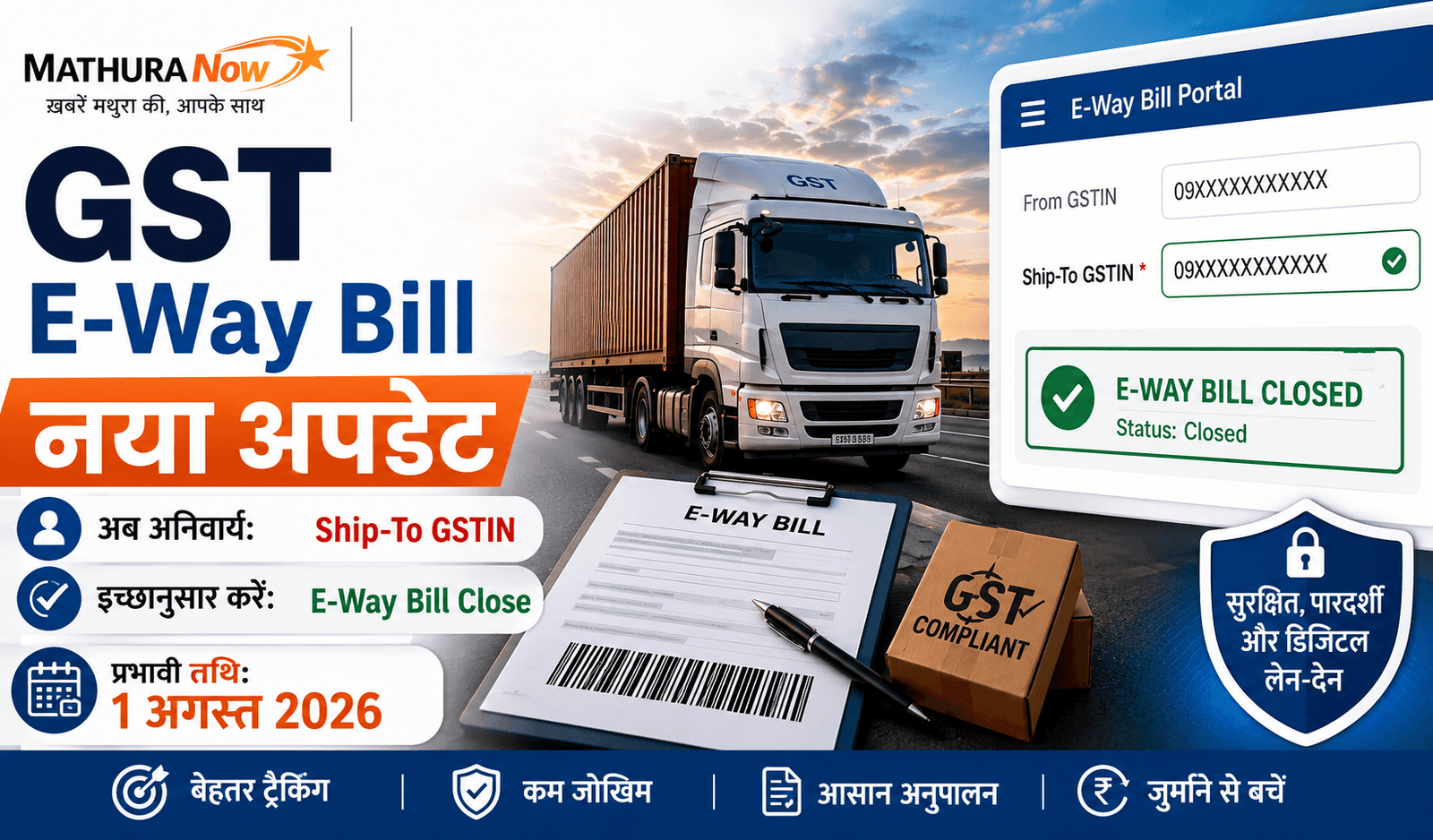
GST E-Way Bill Rules Change from August 1, 2026
The Goods and Services Tax Network (GSTN) has introduced significant changes to the E-Way Bill (EWB) system aimed at improving shipment traceability, strengthening GST compliance, and reducing opportunities for tax evasion. The revised framework affects GST-registered businesses, transporters, logistics operators, accountants, and enterprises that generate E-Way Bills through ERP or API-based systems.
Although earlier communications indicated implementation from June 15, 2026, GSTN later issued Advisory 661, extending the mandatory implementation date to August 1, 2026. The extension provides additional time for businesses, GST Suvidha Providers (GSPs), and ERP software vendors to update their systems.
Mandatory Ship-To GSTIN in Bill-To/Ship-To Transactions
One of the most important changes is the mandatory requirement to provide the Ship-To GSTIN for Bill-To/Ship-To transactions. Earlier, many businesses generated E-Way Bills by entering only the billing party’s GSTIN, even when goods were dispatched to another registered location.
Under the revised rules, the E-Way Bill portal and APIs will reject Bill-To/Ship-To transactions if the Ship-To GSTIN field is left blank.
Where goods are delivered to an unregistered recipient, businesses must enter “URP” (Unregistered Person) instead of leaving the field empty. This requirement standardises reporting and improves digital tracking of goods movement.
GSTN says the change is intended to strengthen the audit trail and reduce misuse of Input Tax Credit (ITC) through incorrect destination reporting.
New E-Way Bill Closure Facility Introduced
GSTN has also launched a new E-Way Bill Closure Facility. Previously, an E-Way Bill remained active until its validity period expired, regardless of whether the goods had already reached their destination.
The new feature allows users to voluntarily mark an E-Way Bill as “Closed” once delivery has been successfully completed.
The closure can be initiated by:
- Supplier
- Recipient
- Transporter
- Assigned Driver
Drivers without portal credentials can use an OTP-based authentication process available through the public search section using their registered mobile number.
At present, GSTN has clarified that this facility is voluntary. Businesses will not face penalties if an E-Way Bill is not manually closed, as it will continue to expire automatically after its validity period. However, regular use of the closure facility can improve record reconciliation and support audit readiness.
Comparison of the New Rules
| Parameter | Earlier System | From August 1, 2026 |
|---|---|---|
| Ship-To GSTIN | Not strictly mandatory | Mandatory for Bill-To/Ship-To transactions |
| Unregistered Recipient | Often left blank | Must use “URP” |
| E-Way Bill Status | Automatically expired | Can be voluntarily marked Closed |
| Closure Time | Not available | Same day or immediately succeeding day |
What Businesses Should Do
Businesses should review their customer master records and identify all unregistered recipients to ensure the correct use of the URP code. ERP systems, billing software, and API integrations should be updated before August 1 to avoid disruptions in E-Way Bill generation.
Companies should also coordinate with GST Suvidha Providers and software vendors to validate the new API fields in the testing environment before moving to production.
Transport teams, warehouse staff, and drivers should be trained on the new closure process, including the OTP-based option, to ensure accurate documentation after deliveries.
Why the Update Matters
These changes represent another step in GSTN’s effort to strengthen digital compliance and improve transparency across India’s logistics ecosystem. Businesses that update their systems in advance can minimise operational disruptions, reduce reconciliation issues, and remain compliant with evolving GST requirements.
Frequently Asked Questions
When do the new GST E-Way Bill rules become mandatory?
The mandatory implementation date is August 1, 2026, following GSTN Advisory 661.
What should businesses enter for an unregistered customer?
The Ship-To GSTIN field should contain URP (Unregistered Person).
Is the E-Way Bill Closure Facility mandatory?
No. GSTN has introduced it as a voluntary facility. E-Way Bills will continue to expire automatically if they are not manually closed.
Who can close an E-Way Bill?
The supplier, recipient, transporter, or assigned driver can initiate the closure after successful delivery.