

Purushottam Maas Celebrations Draw Thousands of Devotees to Radha Rani Albeli Sarkar Temple
Mathura: The sacred Braj region is currently immersed in the spiritual fervor of Purushottam Maas (Adhik Maas), with temples, ashrams, and religious centers hosting a variety of devotional and cultural events.
Among the prominent venues witnessing large gatherings of devotees is the renowned Shri Radha Rani Albeli Sarkar Temple, located in Mahavidya Colony, Govind Nagar, Mathura. Since the beginning of the holy month, the temple has been organizing daily religious celebrations, special decorations, devotional programs, and unique darshan experiences that are attracting thousands of devotees from across the country.
Devotional Atmosphere Throughout the Holy Month
The temple premises have transformed into a center of devotion and celebration during Purushottam Maas. Devotees arriving from different states are participating in special worship ceremonies, sankirtan, bhajan programs, and cultural events organized throughout the month.
Visitors describe the divine darshan of Shri Ji as a spiritually uplifting experience, with the temple’s vibrant celebrations creating an atmosphere of faith, devotion, and joy.
Grand Phool Bangla and Bhajan Sandhya
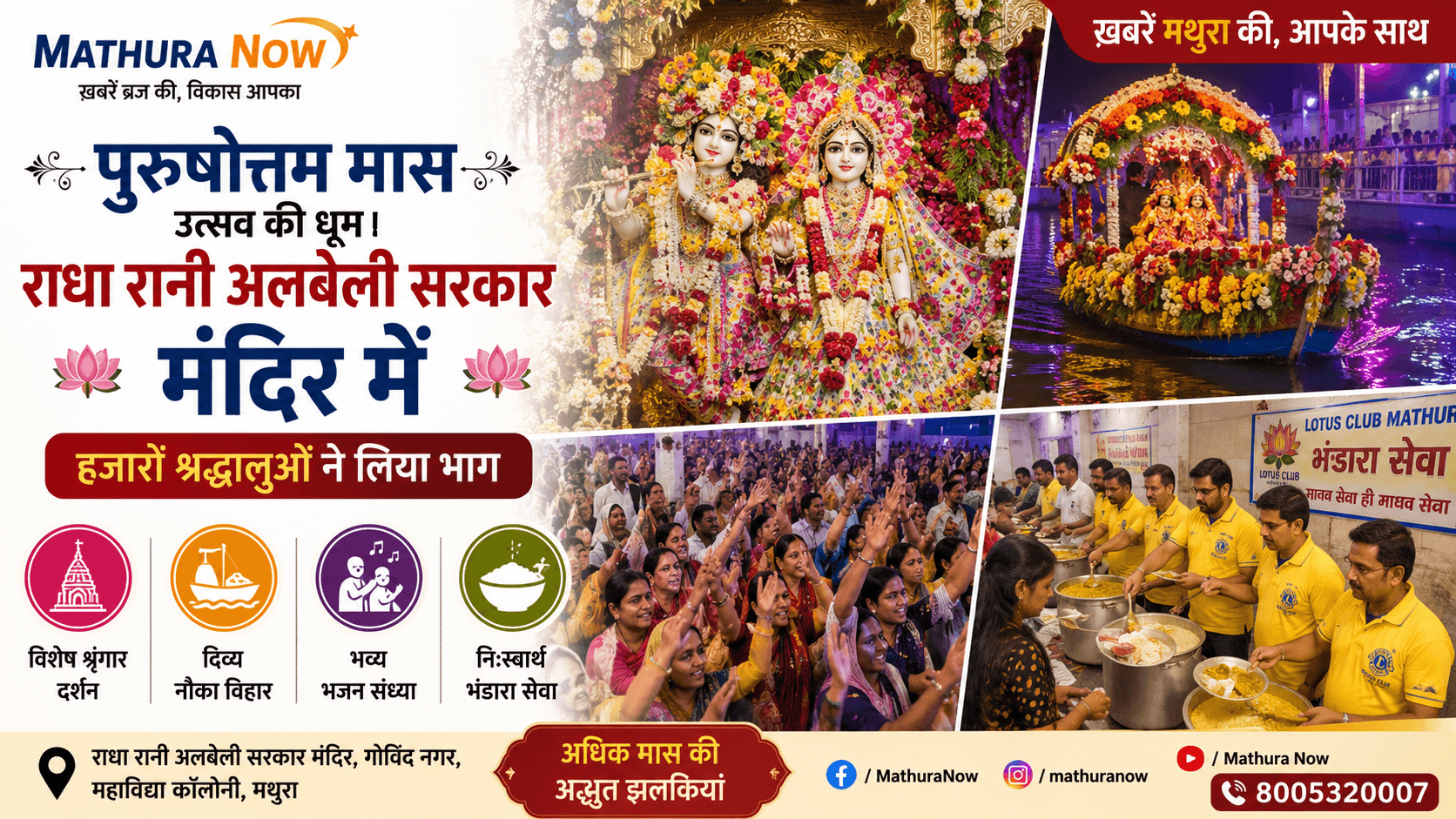
As part of the special Adhik Maas festivities, the temple recently organized a magnificent Phool Bangla and Bhajan Sandhya.
The deities were beautifully adorned with colorful floral decorations, offering devotees a mesmerizing darshan. The fragrance of fresh flowers combined with soulful devotional music created a deeply spiritual ambiance throughout the temple complex.
Large numbers of devotees attended the event and participated in the devotional celebrations.
Divine Nauka Vihar Darshan Enthralls Devotees
Another major attraction during the ongoing festivities was the special Nauka Vihar (Boat Festival) Darshan of Shri Radha Rani Albeli Sarkar.
The unique celebration generated tremendous enthusiasm among devotees, who gathered in large numbers to witness the rare and beautifully arranged darshan.
The temple administration made elaborate arrangements to ensure that visitors could comfortably participate in the festival and experience the divine occasion.
Special Bhajan Evening Scheduled on June 15
Continuing the series of devotional events, a grand Bhajan Sandhya is scheduled to be held on June 15.
Renowned devotional singers from different parts of the country are expected to perform, offering melodious bhajans that will immerse devotees in spiritual bliss.
The event is anticipated to attract a large gathering of worshippers and music lovers alike.
Lotus Club Family Conducting Daily Bhandara Service
Alongside the religious celebrations, social service activities are also playing an important role during the holy month.
The Lotus Club Family, known for its community service initiatives, has been organizing a daily Bhandara Seva at the temple premises.
Club members are voluntarily distributing prasad and meals to devotees and needy individuals visiting the temple. The initiative reflects the spirit of selfless service, where serving humanity is considered a form of serving the Divine.
Faith, Service and Celebration in Perfect Harmony
Devotees believe that the ongoing celebrations at Shri Radha Rani Albeli Sarkar Temple have enhanced the spiritual significance of Purushottam Maas in Mathura.
Many visitors have noted that such religious gatherings not only strengthen personal faith but also promote social harmony, compassion, and a spirit of community service.
With devotional programs, special darshan events, cultural celebrations, and charitable activities continuing throughout the holy month, the temple remains a vibrant center of faith and devotion for the Braj region.
MathuraNow View
Purushottam Maas holds special significance in the spiritual traditions of Braj, and celebrations like those at Shri Radha Rani Albeli Sarkar Temple reflect the unique blend of devotion, culture, and service that defines the region.
As thousands of devotees continue to participate in the festivities, the temple stands as a shining example of how faith-based institutions can nurture both spiritual growth and community welfare during one of the most sacred periods of the Hindu calendar.