

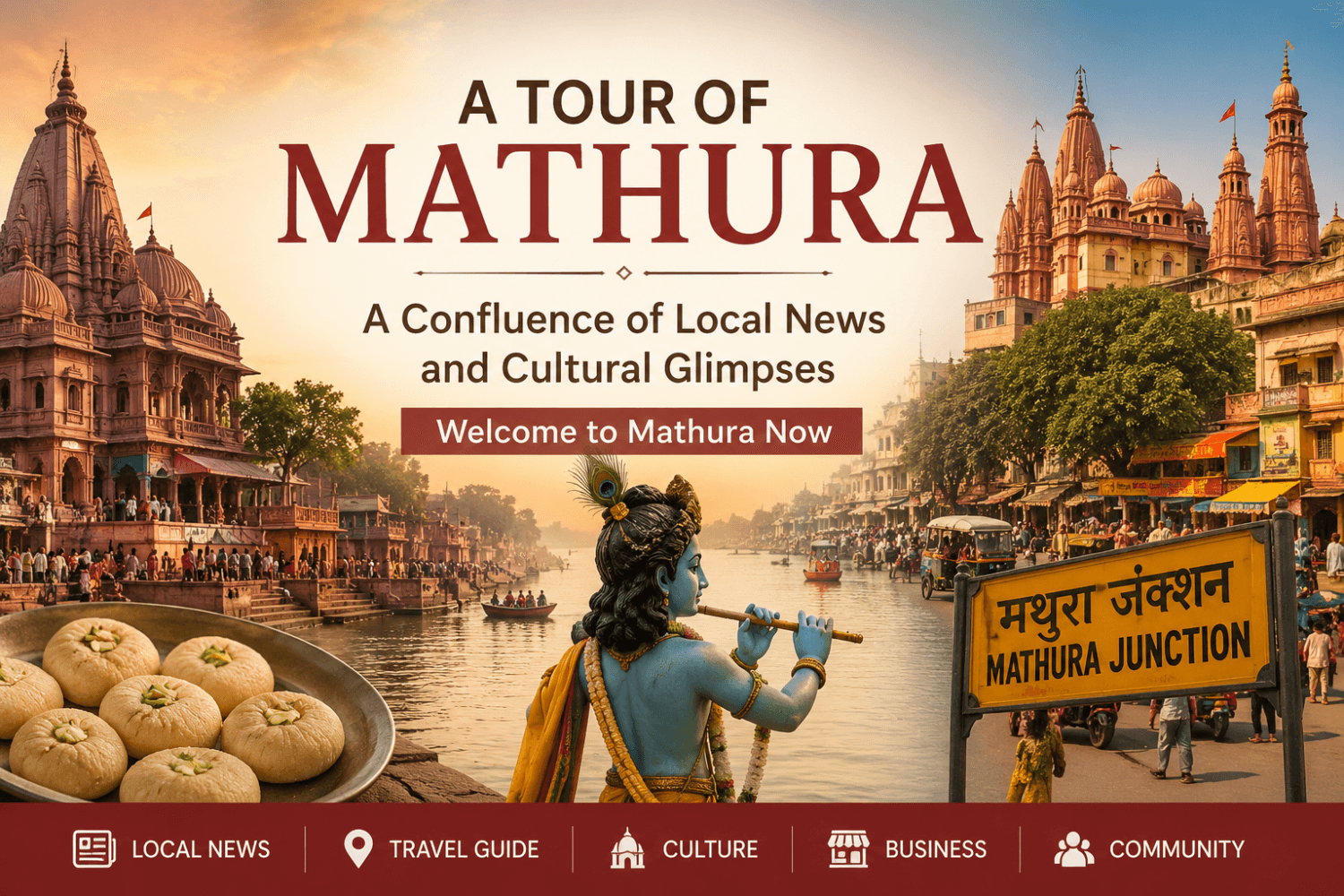
Mathura is often introduced to the world as the birthplace of Lord Krishna, but the real identity of the city goes far beyond spirituality alone. The streets of Mathura carry stories that connect faith, local life, business, tourism, culture, food, transportation, politics, and everyday public experiences into one continuous rhythm. For visitors arriving for the first time, Mathura feels like a city where ancient traditions and modern India walk side by side.
From the early hours of the morning, temple bells begin echoing through narrow streets while local vendors prepare tea, fresh snacks, flowers, and devotional items for pilgrims. Rickshaw drivers discuss traffic routes near major temples, travelers search for affordable hotels, and local shopkeepers open stores that have existed for generations. This daily movement creates an atmosphere that cannot be understood only through photographs or travel brochures.
Mathura has increasingly become more than a pilgrimage destination. In recent years, digital searches related to Mathura tourism, Vrindavan temple routes, local transportation, property prices, government facilities, hospitals, educational institutions, and business opportunities have grown rapidly. Travelers no longer visit cities blindly; they rely heavily on online local information before planning their journeys. This shift has created a growing need for authentic local digital platforms that provide practical and searchable information.
Platforms such as MathuraNow are emerging as part of this changing digital culture by focusing not only on local stories but also on travel guidance, business listings, cultural observations, public resources, and everyday city updates. The goal is not merely to report events, but to help people understand how the city functions in real life.
One of the most fascinating aspects of Mathura is how every locality carries a different identity. Areas near Krishna Janmabhoomi remain crowded with pilgrims and security activity throughout the day, while the ghats near Yamuna reflect a slower and more spiritual atmosphere during sunrise and evening prayers. Markets around Holi Gate and Chowk Bazaar continue to preserve traditional shopping culture where sweets, garments, handicrafts, and devotional products dominate local trade.
Vrindavan, closely connected with Mathura, adds another emotional and cultural dimension to the region. The town attracts not only devotees but also international travelers, spiritual seekers, researchers, musicians, and content creators who wish to experience the devotional traditions associated with Krishna. Daily kirtans, temple festivals, foreign visitors practicing devotional music, and the unique blend of Indian and global spiritual culture make Vrindavan unlike any other city in India.
Transportation has also transformed significantly over the years. Electric rickshaws now dominate many routes, making local travel more accessible for visitors. Railway connectivity, highway development, and tourism infrastructure have increased visitor flow from Delhi, Agra, Jaipur, and other nearby regions. At the same time, challenges such as traffic congestion, waste management, overcrowding during festivals, and unplanned urban growth continue to affect both residents and travelers.
Food culture remains another important part of the Mathura experience. Traditional peda continues to be the city’s most recognized sweet, but local cuisine includes a wide variety of kachori, jalebi, lassi, chaats, and seasonal street food that attracts food bloggers and tourists throughout the year. Many visitors consider local food exploration as important as temple visits.
Festival seasons completely transform the atmosphere of the city. During Holi celebrations in Barsana and Vrindavan, streets fill with colors, music, dance, and tourists from across India and abroad. Janmashtami brings another level of spiritual and commercial activity where temples remain active throughout the night and local businesses witness massive crowds. Hotels, transport services, flower vendors, photographers, guides, and food sellers all become part of a temporary festival economy.
Mathura is also witnessing slow but noticeable digital transformation. Local businesses are increasingly appearing online through Google listings, social media pages, and local directories. Travelers now search for terms such as “best hotels in Mathura,” “Vrindavan temple timings,” “nearest hospital,” “family dharamshala,” “electric rickshaw fare,” and “Mathura local market guide” before arriving in the city. Search engines and AI-driven recommendation systems are changing how people discover local places and services.
This creates opportunities for local media platforms that combine storytelling with practical information. Instead of limiting digital publishing to political news alone, modern regional platforms can serve as guides for tourism, culture, local business discovery, and public awareness. Cities like Mathura benefit greatly when authentic local information becomes easily accessible online.
Despite modernization, the emotional identity of Mathura remains deeply connected to faith and memory. Many families continue traditions that have existed for generations. Pilgrims return every year not only for religious reasons but also because of personal emotional attachment to the city. For some visitors, Mathura represents spirituality; for others, it represents culture, simplicity, nostalgia, or a break from fast urban life.
In many ways, Mathura represents a living example of how India’s historical cities continue adapting to the digital age without completely losing their cultural identity. The city’s future will likely depend on how successfully it balances tourism growth, local infrastructure, heritage preservation, environmental protection, and digital accessibility.
For readers, travelers, and local residents alike, exploring Mathura is not simply about visiting temples or reading headlines. It is about understanding the daily life, people, traditions, markets, stories, and evolving identity of one of India’s most culturally significant regions.