
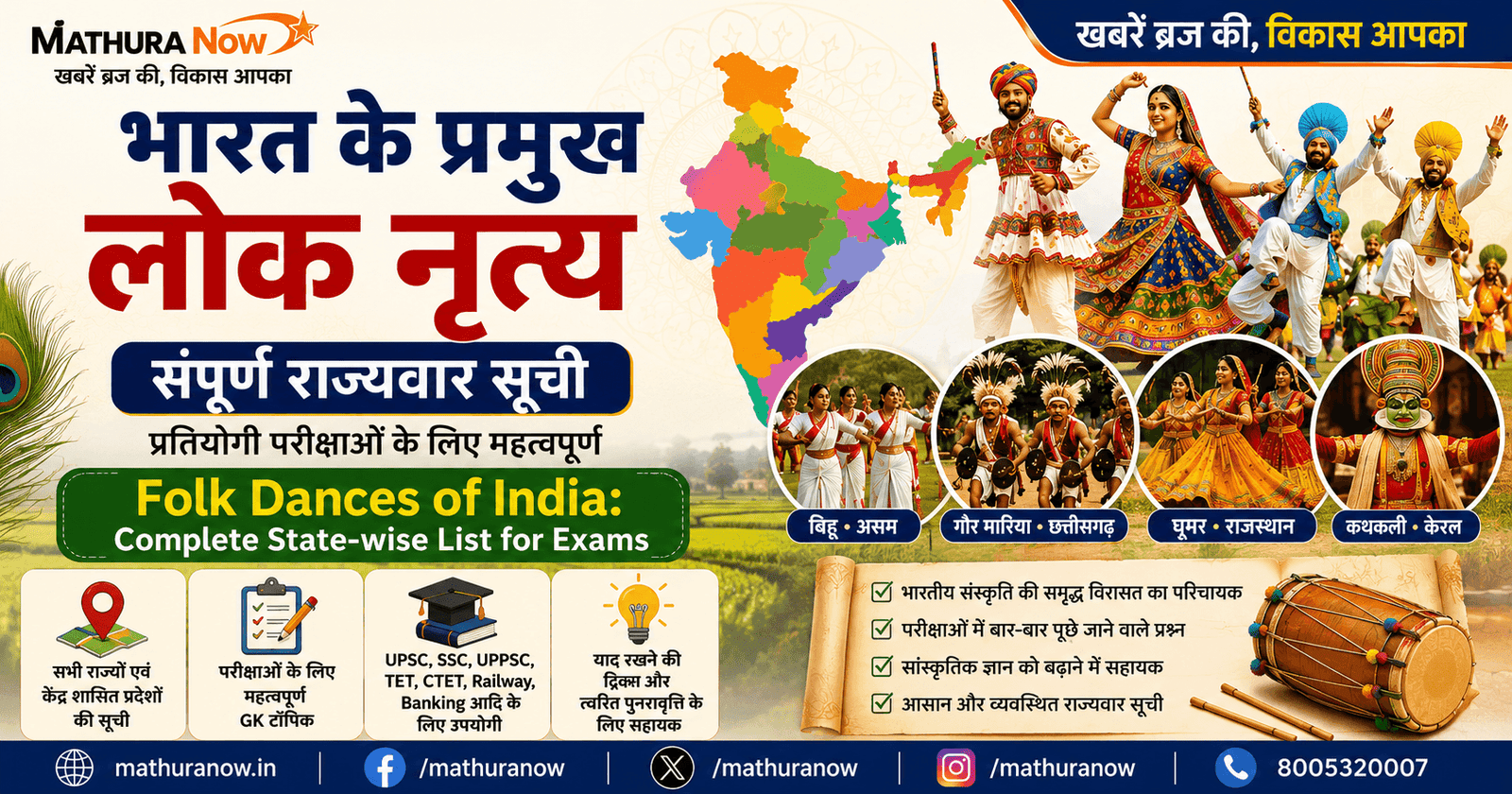
Folk Dances of India: Complete State-wise List for Competitive Exams
Indian folk dances are an important part of the country’s rich cultural heritage and frequently appear in competitive examinations such as UPSC, UPPSC, SSC, Banking, Railway, CTET, UPTET and various state-level recruitment tests. Questions related to traditional folk dances, their states of origin and cultural significance are commonly asked in General Knowledge (GK) sections.
This state-wise compilation of India’s major folk dances serves as a quick revision guide for aspirants preparing for government examinations.
Why Folk Dances Are Important for Competitive Exams
Indian culture and art form a significant section of the General Studies syllabus in many competitive examinations. Candidates are expected to identify famous folk dances with their respective states, making this topic essential for exam preparation.
State-wise Folk Dances of India
| State | Major Folk Dances |
|---|---|
| Andhra Pradesh | Vilasini Natyam, Bhamakalpam, Veeranatyam, Dappu, Tappeta Gullu, Lambadi, Dhimsa, Kolattam |
| Arunachal Pradesh | Budaya, Chalo, Wancho, Pasi Kongki, Ponung, Popiro, Mask Dance, War Dance |
| Assam | Bihu, Sattriya, Bagurumba, Natpuja, Maharas, Kaligopal |
| Bihar | Jata-Jatin, Bakho-Bakhen, Panwariya |
| Chhattisgarh | Panthi, Raut Nacha, Gaur Maria, Sua, Pandwani, Danda, Rahas |
| Goa | Fugdi, Dekhni, Tarangmel, Shigmo, Koli, Ranmale |
| Gujarat | Garba, Dandiya Raas, Tippani, Bhavai |
| Haryana | Jhumar, Phag, Dhamal, Loor, Gugga |
| Himachal Pradesh | Jhora, Jhali, Chharhi, Chhapeli, Mahasu |
| Jammu & Kashmir | Rouf, Hikat, Kud Dandi Nach |
| Jharkhand | Sarhul, Karma, Paika, Jhumar, Fagua |
| Karnataka | Yakshagana, Suggi, Karaga, Kunitha |
| Kerala | Ottam Thullal, Kaikottikali |
| Madhya Pradesh | Jawara, Matki, Phulpati, Grida Dance |
| Maharashtra | Lavani, Koli, Lezim, Dashavatar |
| Manipur | Pung Cholom, Lai Haraoba, Thang Ta |
| Meghalaya | Shad Suk Mynsiem, Nongkrem, Laho |
| Mizoram | Cheraw, Khuallam, Chailam, Zangtalam |
| Nagaland | Rangma, Zeliang, Gethinglim |
| Odisha | Ghumura, Paika, Maya Shabari |
| Punjab | Bhangra, Giddha, Bhand |
| Rajasthan | Ghoomar, Chakri, Gangaur, Kathputli, Panihari |
| Sikkim | Singhi Chham, Yak Chham, Chu Faat |
| Tamil Nadu | Kummi, Kolattam, Karagam, Kavadi |
| Tripura | Hojagiri |
| Uttar Pradesh | Nautanki, Raslila, Kajri |
| Uttarakhand | Garhwali Dance, Kumaoni Dance, Jhora |
| West Bengal | Jatra, Baul |
Quick Exam Tips
- Garba and Dandiya Raas belong to Gujarat.
- Bhangra and Giddha are famous folk dances of Punjab.
- Bihu is the signature folk dance of Assam.
- Lavani is associated with Maharashtra.
- Ghoomar is one of Rajasthan’s best-known traditional dances.
- Cheraw (Bamboo Dance) belongs to Mizoram.
- Hojagiri is the famous folk dance of Tripura.
- Raslila is closely associated with Uttar Pradesh, especially the Braj region.
Preparation Strategy
Competitive exam aspirants should prepare Indian folk dances alongside classical dances, festivals, UNESCO heritage sites, GI tags and important cultural traditions. Revising these topics regularly improves accuracy in the General Awareness section.
Frequently Asked Questions (FAQs)
Why are Folk Dances important for competitive exams?
Questions related to Indian folk dances are regularly asked in UPSC, SSC, Banking, Railway, Teaching and State PSC examinations.
Which folk dance belongs to Gujarat?
Garba and Dandiya Raas are the most famous folk dances of Gujarat.
Which dance is associated with Uttar Pradesh?
Nautanki, Raslila and Kajri are among the major traditional folk performances of Uttar Pradesh.
Which state is famous for Cheraw Dance?
Cheraw, also known as the Bamboo Dance, is the traditional folk dance of Mizoram.
Which examinations include questions on Indian Folk Dances?
UPSC, UPPSC, SSC, Railway, Banking, CTET, UPTET, NDA, CDS and several other competitive examinations include questions on Indian art and culture.