
The Hidden Costs of Free Credit Score Apps: Protecting Your Financial Privacy
Are free credit score apps safe? Learn how these platforms access your personal transaction data and why uninstalling the app is not enough to secure it.
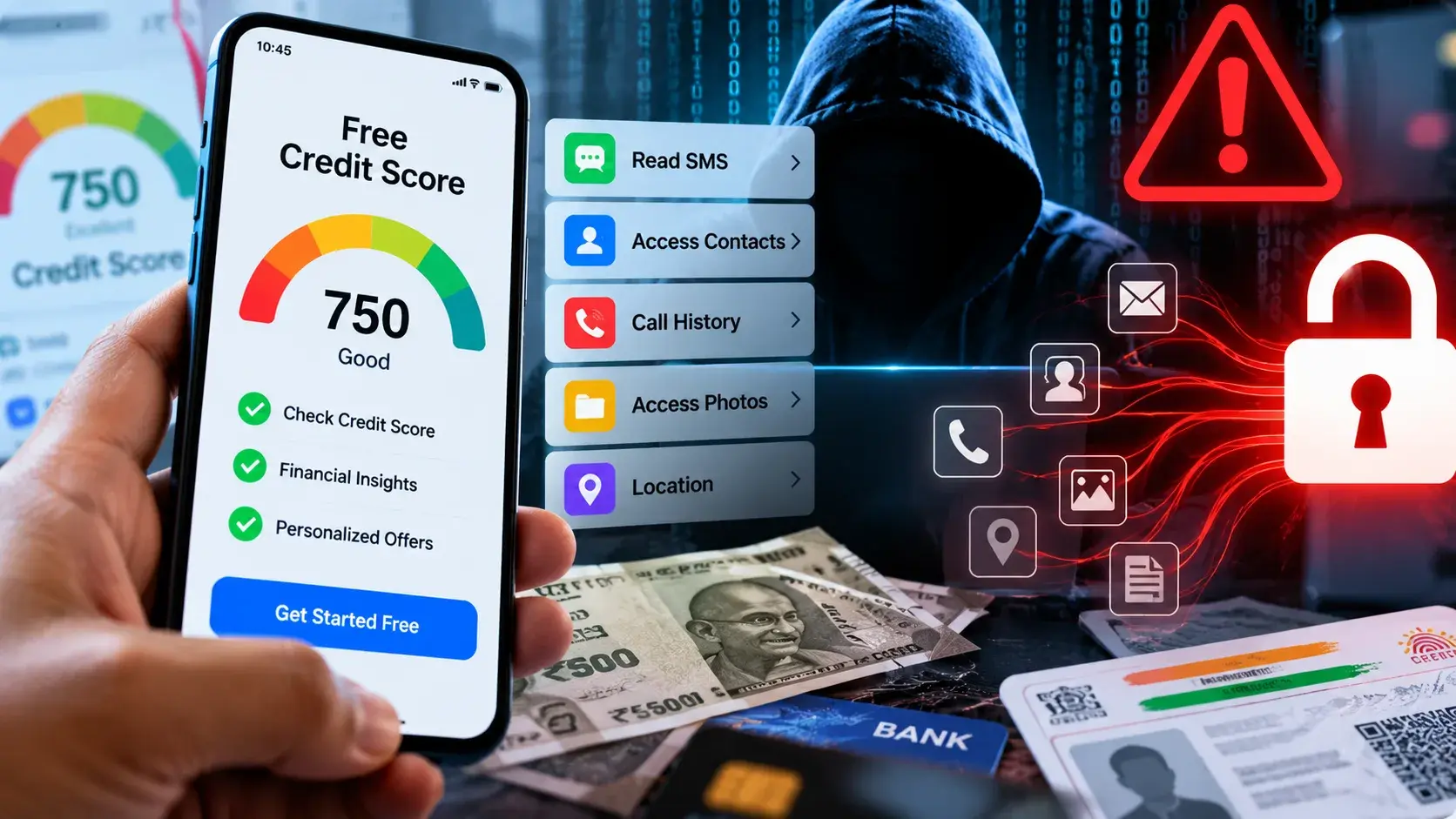
Mathura, October 1, 2026: In the rapidly evolving digital financial landscape, the promise of a “free credit score” or “instant credit improvement” has become a ubiquitous feature of online advertising. Social media platforms are currently flooded with sophisticated marketing campaigns that lure users into downloading various financial tracking and budgeting applications. These apps claim to simplify credit management, yet users are often unaware of the significant trade-offs involved. While the service is marketed as complimentary, consumers frequently exchange their most sensitive banking and transaction data for these reports, often without realizing the long-term implications for their digital privacy.
The Mechanics of the ‘Free Score’ Business Model
Financial literacy experts warn that few fintech applications operate without a clear monetization strategy, and the “free” label is rarely indicative of a lack of commercial intent. When a user installs such an application, they are almost immediately prompted to grant SMS read permissions. This access is technically required for the app to track transaction data, but it grants the platform unprecedented insight into the user’s inbox. By scanning SMS messages, the app analyzes active loans, credit card billing cycles, EMI payment history, and general spending patterns. This process ensures that a user’s comprehensive financial behavior and history are indexed into a third-party database, effectively turning personal financial habits into sellable data.
Also Read: 263 People Receive Free Medical Care at Mathura Appolo Health Camp by MVM
Transitioning from Analysis to Marketing
Once the initial data is harvested, the app often shifts from a passive tracker to an active marketing agent. Users frequently report a subsequent rise in unsolicited phone calls, WhatsApp messages, and push notifications. If a user’s credit score is low, the application often deploys aggressive reminders to settle outstanding debts, while simultaneously pushing high-interest loan products or credit-building services from partner lenders. Conversely, users with higher credit scores are targeted with persistent, spam-like offers for pre-approved loans and new credit cards. This cycle often leaves the consumer trapped in a digital ecosystem where they are no longer the client, but the product being analyzed and marketed to by third-party aggregators.
The Myth of ‘Uninstalling’ for Data Protection
A prevalent misconception among smartphone users is that uninstalling an application from their device automatically purges their data from the service provider’s servers. This is fundamentally incorrect. According to standard data protection policies, merely removing the app does not revoke the consent previously granted to the company. To truly safeguard their information, users must explicitly request an account deletion from within the app settings. In many cases, this requires navigating through complex grievance redressal systems or sending an official request for consent withdrawal and data purging to the company. Without these formal steps, personal financial profiles remain stored and active, potentially accessible for future data analytics or targeted marketing campaigns.
Practical Guidance for Financial Security
To maintain control over sensitive financial information, experts recommend sticking to established, secure channels. For tracking your credit score, always utilize services provided by the four RBI-recognized credit bureaus: TransUnion CIBIL, Experian, CRIF High Mark, and Equifax. These institutions provide a free credit report once annually through their official, secure portals. Furthermore, users should refrain from granting SMS permissions to third-party applications, as banking and payment services remain fully functional without this access. If you encounter legitimate disputes regarding loans or credit card accounts, bypass third-party platforms entirely and contact your bank’s official branch or verified customer care department. Prioritizing digital hygiene—such as limiting the number of fintech apps installed on your device—remains the most effective defense against the risks posed by excessive data aggregation and digital distraction in today’s interconnected economy.
Also Read: What to Do If Someone Goes Missing in Uttar Pradesh: A Complete Family Guide
Disclaimer: This article has been published solely in the public interest and for consumer awareness. Its objective is not to target any specific company or app, but rather to raise awareness among readers regarding digital privacy and data security.
Get Mathura's latest news on WhatsApp
Breaking news and important local updates, straight to your phone
Join channel