Vrindavan’s Ranganatha Temple Enacts Gaj-Grah Leela
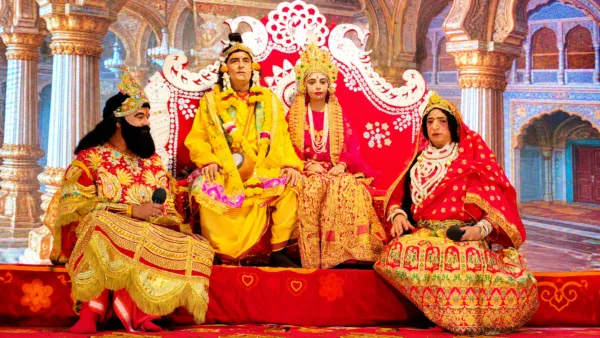
Devotees gathered at Sri Ranganatha Temple in Vrindavan for the traditional Gaj-Grah Leela enacted during the sacred month of Sawan.
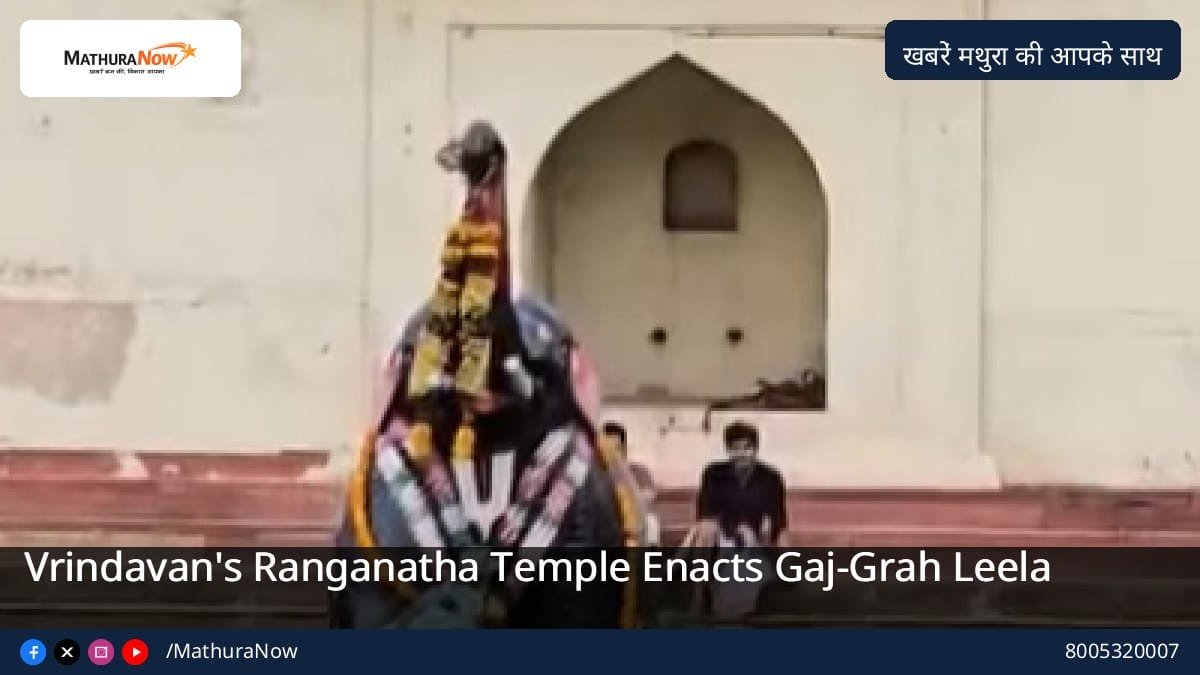
VRINDAVAN: The traditional Gaj-Grah Leela was enacted at the historic Sri Ranganatha Temple in Vrindavan during the sacred month of Sawan, drawing a large gathering of devotees to witness the South Indian Vaishnava ritual.
As part of the centuries-old observance, the procession of Lord Ranganatha began from the sanctum sanctorum. The deity was carried on a gold-plated Garuda mount toward the holy Pushkarini (temple pond) located near the eastern gate. Priests chanted Vedic hymns and recited sacred scriptures as the procession moved through the temple complex.
Also Read: Fire at Vrindavan Scrap Yard Near Pagal Baba Market Causes Local Alarm
Symbolic Staging of Gajendra Moksha
Upon reaching the Pushkarini, temple priests conducted formal rituals and prayers before beginning the symbolic re-enactment of the Gaj-Grah Leela, also known as Gajendra Moksha. According to Hindu mythology, when the elephant king Gajraj was seized by a crocodile (grah) in a water reservoir, a prolonged struggle ensued. Gajraj eventually prayed to Lord Vishnu, who rushed barefoot on his mount Garuda to rescue his devotee and slayed the crocodile with the Sudarshan Chakra, granting liberation to both creatures.
The live re-enactment lasted for approximately half an hour, during which priests demonstrated the sequence of events as devotees chanted hymns and offered prayers. The ritual concluded with the traditional Kumbha Aarti, after which the palanquin carrying Lord Ranganatha returned to the sanctum sanctorum.
Longstanding Tradition
Temple representative Anuj Swami stated that the ritual has been performed regularly since the establishment of the Ranganatha Temple. He noted that the annual enactment reinforces the spiritual message that the divine promptly responds to the sincere call of a devotee in distress.
Saurabh Jain
Bureau Chief
Saurabh Jain - Mathura is associated with MathuraNow and contributes coverage related to local updates, civic developments, Braj culture, and regional news from Mathura-Vrindavan.
Get Mathura's latest news on WhatsApp
Breaking news and important local updates, straight to your phone
Join channel