Braj Panchang for September 19, 2026: Radha Ashtami and Daily Timings
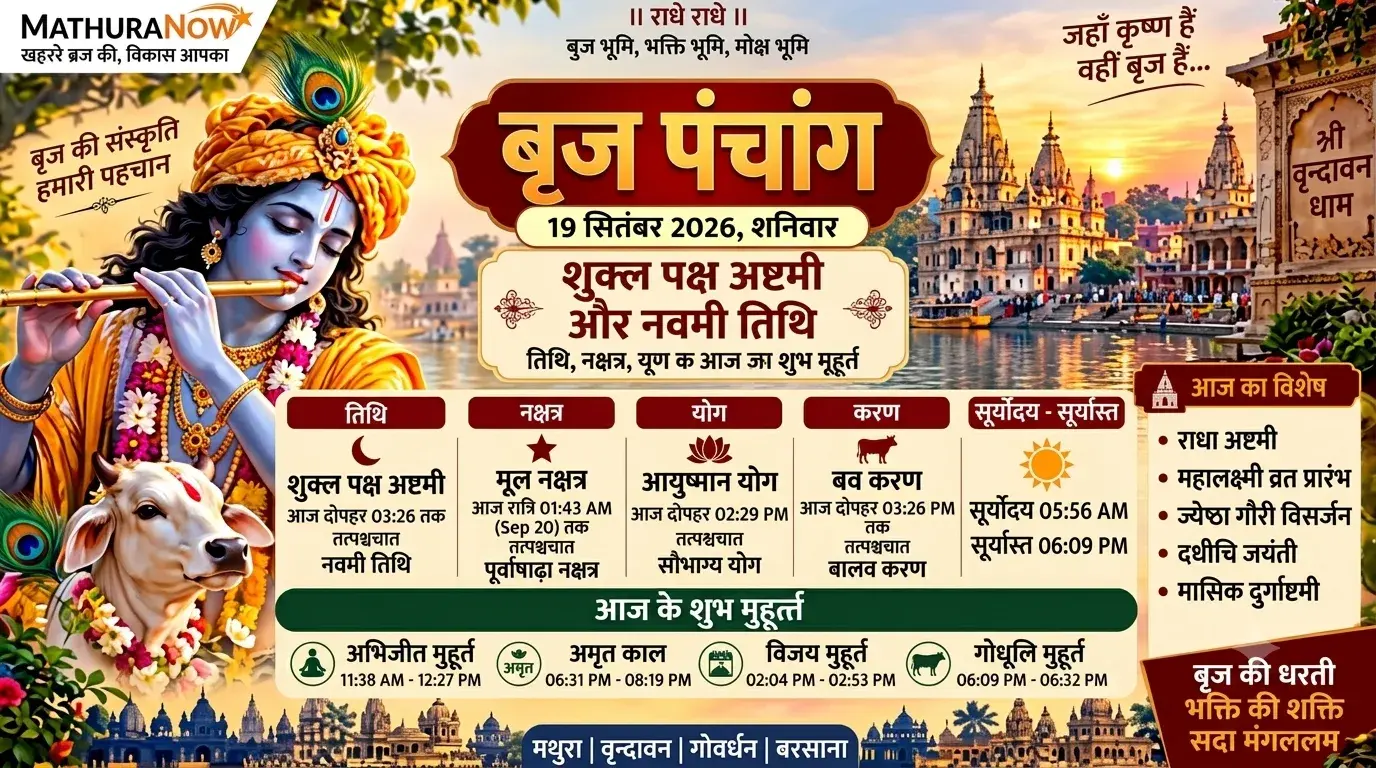
Today, September 19, 2026, marks an exceptionally auspicious day in the holy land of Braj as we celebrate the divine appearance day of Shri Radha Rani. Known widely as Radha Ashtami, this day represents the Shukla Paksha Ashtami of Bhadrapada, serving as a beacon of devotion for millions of pilgrims visiting Mathura and Vrindavan. As the second Chaturmasa continues, the atmosphere is electric with spiritual fervor. The Tithi of Shukla Ashtami prevails until 03:26 PM, transitioning thereafter into Shukla Navami. This Saturday serves as a moment of profound reflection and celebration, characterized by the onset of the Mahalakshmi Vrat, the observance of Masik Durgashtami, and the sacred Dadhichi Jayanti, all converging to create a tapestry of immense divine grace across our sacred geography.
Spiritual Significance and Traditions of Radha Ashtami
Radha Ashtami is the crown jewel of the Braj calendar, representing the manifestation of the Hladini Shakti, or the pleasure potency of the Supreme Lord. In Vrindavan, temples are adorned with vibrant flowers, and the deity of Radha Rani is decorated in elaborate raiment, often featuring heavy ornamentation that draws thousands of devotees from every corner of the world. Pilgrims engage in the parikrama of the sacred Govardhan Hill or participate in the traditional Abhishek ceremonies conducted within the sanctum sanctorum of major shrines. The day is also marked by the commencement of the Mahalakshmi Vrat, where devotees seek the goddess’s benevolence for prosperity and spiritual wisdom. The presence of Ganda Moola Nakshatra requires thoughtful navigation, as practitioners balance their festive rituals with the traditional Vedic prescriptions for such timings, ensuring that the sanctity of these observances remains unblemished throughout the day.
Auspicious Windows for Spiritual Engagement
For those seeking to align their personal prayers and important endeavors with the celestial rhythms of the day, several auspicious windows are available. The Abhijit Muhurta, spanning from 11:38 AM to 12:27 PM, provides an ideal timeframe for initiating new spiritual tasks or long-term devotional projects. Additionally, the Vijaya Muhurta, occurring between 02:04 PM and 02:53 PM, is traditionally favored for addressing challenges or performing acts of devotion that require persistence and inner strength. As the evening approaches, the Godhuli Muhurta from 06:09 PM to 06:32 PM offers a pristine moment for sunset prayers, while the Amrit Kalam between 06:31 PM and 08:19 PM provides an excellent opportunity for meditation. Furthermore, the Ravi Yoga emerging at 01:43 AM on September 20 serves as a powerful catalyst for successful outcomes, encouraging devotees to remain mindful of these temporal alignments to maximize the spiritual benefits of their activities.
Navigating Inauspicious Periods and Planning
While the day is saturated with divine energy, it is equally important to acknowledge the periods traditionally considered less conducive to material ventures. The Rahu Kaal, which falls between 08:59 AM and 10:31 AM, is a duration strictly avoided for commencing any new or significant work, as per long-standing astrological customs. Similarly, the Yamaganda Kaal from 01:34 PM to 03:05 PM and the Gulika Kaal between 05:56 AM and 07:27 AM are designated as periods where one might expect obstacles or lack of desired progress. By consciously avoiding these intervals for decision-making or financial transactions, residents and pilgrims in Braj can effectively focus their efforts during the more harmonious Muhurtas mentioned previously, ensuring that the day is spent with a balanced approach that respects both Vedic guidelines and the practical necessities of life in our bustling holy region.
Also Read: Braj Raj Utsav 2026: 11-Day Cultural Fair Set for Mathura and Vrindavan
As the sun sets over the Yamuna on this significant Saturday, the temples of Mathura and Vrindavan resonate with the sounds of Kirtan and bhajans. Today is not merely a date on the calendar but a day to deepen one’s connection to the eternal pastimes of the divine. With the Jyeshtha Gauri Visarjana also observed today, the community remains deeply engaged in the transition between these various sacred rites. Whether you are participating in the grand celebrations of Radha Ashtami or observing the start of the Mahalakshmi Vrat, the energy of the Braj region provides a perfect backdrop for inner transformation. We encourage all our readers to embrace the blessings of this holy day, keeping in mind the auspicious timings provided to ensure their devotional journey is both fruitful and auspicious under the guidance of the eternal traditions of our land.

Shri Shri Amit Agarwal
Astrologer
Shri Shri Amit Agarwal - Astrologer is associated with MathuraNow and contributes coverage related to spirituality, Braj culture, temple affairs, religious events, public-interest…
Get Mathura's latest news on WhatsApp
Breaking news and important local updates, straight to your phone
Join channel