Managing Ego and Anger in Service: Insights from Prema Nand Ji Maharaj of Vrindavan
Spiritual leader Prema Nand Ji Maharaj from Vrindavan explains the distinction between performing necessary action and harboring ego or malice during service.

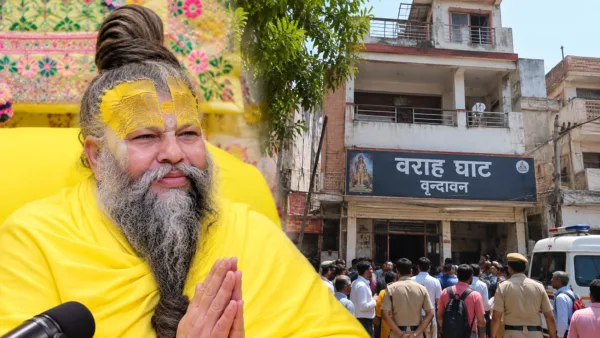
Vrindavan, September 14, 2026: In a recent spiritual discourse held in the holy land of Vrindavan, the esteemed religious leader Prema Nand Ji Maharaj addressed the complex relationship between devotional service, or sewa, and the internal struggle with negative emotions like anger and ego. The event, which drew a dedicated audience of followers, focused on the practical challenges that individuals face when attempting to maintain a state of spiritual purity while engaged in community service and religious observances. Through his teachings, Prema Nand Ji Maharaj provided guidance on how to navigate these emotional currents without compromising one’s devotion.
The Nature of Service and the Trap of Ego
The dialogue began when a member of the audience, concerned about the potential for moral pitfalls during periods of intense activity and service, posed a question regarding the thin line between necessary assertiveness and the onset of aham, or ego. The participant specifically inquired whether it is permissible to express anger during the course of religious work and how one might remain grounded if such emotions arise. Prema Nand Ji Maharaj responded with a clear emphasis on the mindset of a servant. He articulated that the primary purpose of sewa is to honor the divine, and thus, the opportunity to serve is a gift from God. In this context, he argued, there is no place for pride. True service, according to his teachings, requires a profound sense of humility, where the individual acts as a conduit for divinity rather than a primary actor seeking recognition or control.
Also Read: Vrindavan Prepares for 546th Birth Anniversary Festival of Swami Haridas
Distinguishing Between Action and Malice
Addressing the nuanced question of anger, the spiritual leader made a distinct separation between the outward expression of firm discipline and the inner reality of hatred. He explained that in the course of managing large tasks or directing groups in religious settings, one might occasionally find it necessary to adopt a stern demeanor to motivate or correct others. He clarified that such a display of anger, when used as a pedagogical or administrative tool to ensure the proper execution of work, does not necessarily constitute a sin. The crucial factor, according to the teachings provided, is the presence or absence of genuine malice. If the anger is merely an act—a calculated response meant to achieve a positive outcome—it is not harmful to the soul. However, the moment that anger transforms into deep-seated disgust, hatred, or the desire to harm another person, it becomes a moral burden that obscures the seeker’s spiritual vision.
Practical Guidance for Daily Practice
The guidance offered by Prema Nand Ji Maharaj serves as a roadmap for those deeply involved in the social and ritual fabric of the Braj region. By emphasizing that one should never harbor true hatred toward others, even in moments of frustration, the leader encourages practitioners to monitor their internal state constantly. He advocates for a practice of detached engagement, where one can be firm without losing one’s inner peace. This distinction is vital for those who dedicate their lives to temple work or communal service, as it allows them to maintain focus on their spiritual goals while performing their worldly duties effectively. The session concluded with a reminder that every act of service is an offering, and that keeping one’s heart free from malice is the highest form of discipline.
As a regular feature of his ongoing outreach in Vrindavan, Prema Nand Ji Maharaj continues to provide these sessions to help followers resolve the contradictions of their daily lives. The insights shared during this gathering highlight the broader commitment of the Braj community to fostering a culture of mindful devotion. For those in the local Mathura and Vrindavan area, these teachings offer a framework for balancing the high demands of public service with the quiet, internal necessity of maintaining a humble and loving temperament, regardless of the challenges encountered in the path of devotion.
Get Mathura's latest news on WhatsApp
Breaking news and important local updates, straight to your phone
Join channel