


Severe Glacial Collapse and Flooding Reported Near Nepal-Tibet Border
A glacial collapse near the Nepal-Tibet border has triggered flash floods and landslides, resulting in significant casualties and widespread devastation.
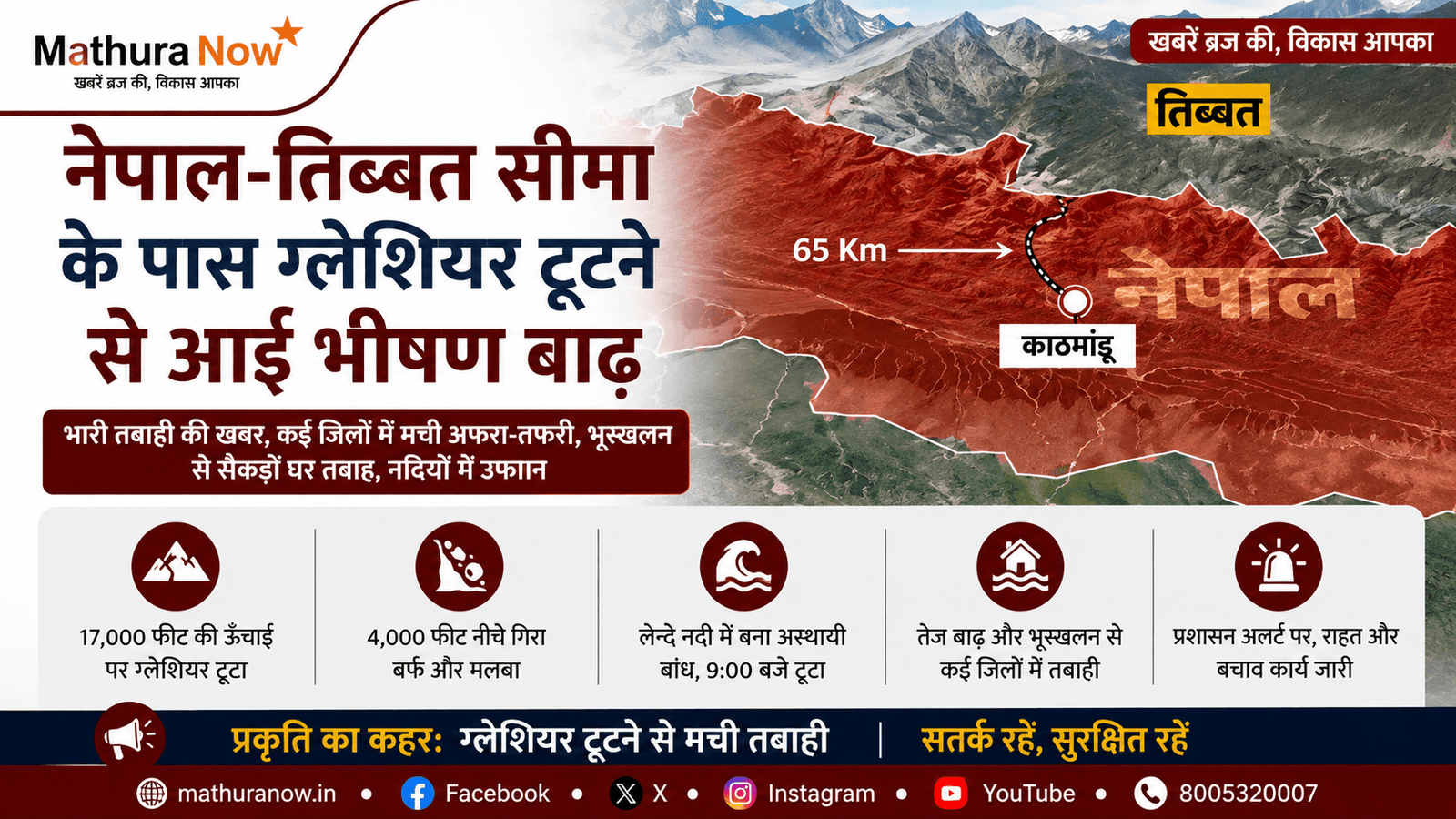
Mathura, August 29, 2026: A catastrophic glacial collapse occurred near the Nepal-Tibet border on August 26, 2024, triggering a series of flash floods and landslides that have caused extensive destruction across several districts. According to available reports, the incident began at approximately 8:30 a.m. when a glacier situated at an elevation of 17,000 feet reportedly collapsed. The mass descended 4,000 feet, generating a massive debris flow measuring 2,000 feet in width and producing a seismic event measured at 5.2 magnitude. The resulting surge of water and sediment reached the Lende River by 8:37 a.m., where it formed a temporary dam that eventually failed around 9:00 a.m., releasing a torrent into lower-lying regions.
Impact Across Multiple Districts
The geographical impact of the disaster has been severe, primarily affecting the Rasuwa, Nuwakot, Dhading, and Chitwan districts. As the floodwaters moved through these regions, they inundated the Lende, Bhote Koshi, and Trishuli river valleys, destroying infrastructure and settlements in their path. The rapid nature of the flash flood left little time for residents in the downstream areas to evacuate or prepare for the surge. The disaster has since highlighted the extreme vulnerability of high-altitude mountain communities to geological shifts and climate-related events in the Himalayas, as the sudden failure of natural damming mechanisms often results in unpredictable and deadly outcomes.
Also Read: RCB Defeat GT to Win IPL 2026: Kohli, Patidar and a Season to Remember
Casualties and Ongoing Search Operations
As of midday on August 27, the human toll of the disaster has reached critical levels. Official estimates indicate that 175 fatalities have been confirmed, while approximately 1,500 individuals remain missing. Of those unaccounted for, authorities have noted that around 800 are foreign nationals, likely tourists or workers present in the region during the peak of the season. Emergency services and local administrative teams are struggling to navigate the treacherous, mud-covered terrain to locate survivors. The sheer scale of the debris flow has made accessibility to affected villages particularly difficult, complicating search and rescue missions that are currently ongoing across the four affected districts.
Risk of Secondary Disasters
Beyond the immediate casualties, officials and geological experts are monitoring the situation for potential secondary disasters. Reports indicate that another debris blockage currently remains in the river near the Nepal-Tibet border, maintaining a persistent risk of further flooding should this new dam collapse under pressure. The volatile state of the terrain, characterized by unstable slopes and high volumes of residual water, continues to pose a significant threat to rescue personnel working in the valleys. While international aid and relief efforts are being coordinated, the unstable environmental conditions serve as a significant barrier to the rapid delivery of essential supplies to the displaced populations.
Challenges in Reporting and Information Verification
The reporting of this disaster has been complicated by the widespread circulation of varied media, including footage that has been explicitly marked as AI-generated. The visual material provided from the site includes a mix of surveillance-style clips, satellite-style aerial imagery, and digital simulations. Given the ambiguity regarding the origin of certain casualty figures and the reliance on simulated imagery, news organizations are exercising caution in verifying the full extent of the damage. For now, the priority remains the verification of the official death toll and the coordination of the search for the 1,500 missing persons. As the situation remains fluid, residents and international observers are waiting for more definitive data from the central Nepali authorities regarding the long-term prognosis for the affected regions and the stability of the remaining river blockages.




Your first comment on any article never needs an account. If an author replies and you want to keep the conversation going, a free account keeps things trustworthy. Log in or sign up.