The Legacy of Doordarshan Remembering India’s Television Journey Since 1959
Explore the history of Doordarshan, India's national broadcaster, from its experimental launch on September 15, 1959, to its evolution under Prasar Bharati.
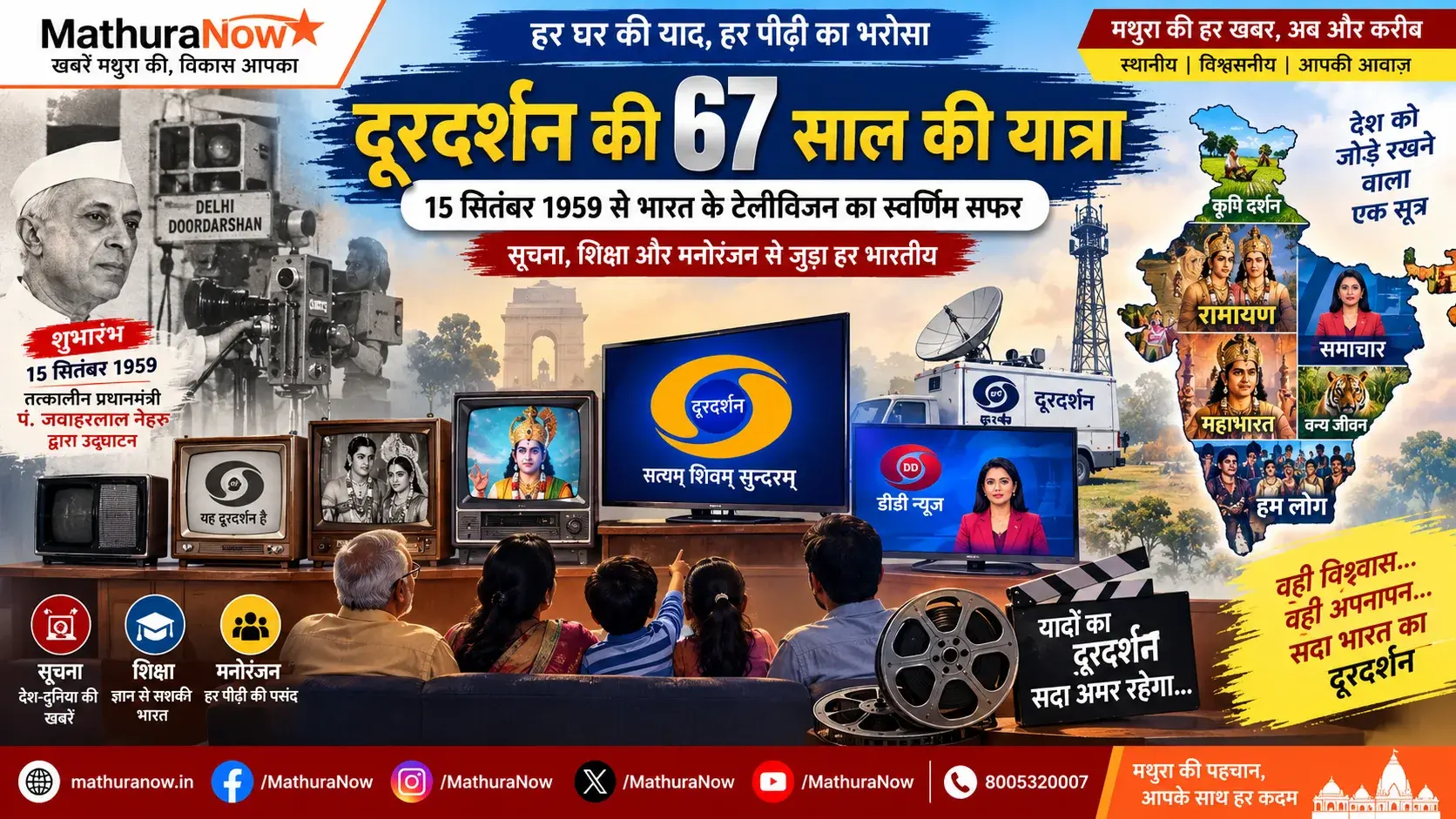
New Delhi, September 14, 2026: September 15, 1959, marks a watershed moment in the annals of Indian broadcasting, serving as the official dawn of television (Doordarshan) in the country. It was on this day that the first experimental television service was inaugurated in New Delhi, setting into motion a cultural and technological shift that would eventually reshape how millions of Indians consumed information and entertainment. This modest beginning, which initially lacked a dedicated independent structure, was managed as an auxiliary of All India Radio (AIR). The vision behind this initiative was to harness the power of visual storytelling for national development, education, and social awareness, a mission that has persisted through decades of rapid transformation in the Indian media landscape.
The Humble Beginnings and Technical Infrastructure
The experimental phase of television in India was defined by severe technical constraints. At the time of its inception, the service utilized a small 5-kilowatt transmitter and operated from a rudimentary temporary studio setup. Because of these limitations, the broadcast radius was restricted to a mere 40-kilometer range around the national capital. The programming schedule was equally sparse, consisting of only one-hour broadcasts twice a week, primarily focused on social education and awareness campaigns. The inaugural event was presided over by the then-President of India, Dr. Rajendra Prasad, signifying the government’s commitment to exploring this new medium. For those early years, television was not yet a household commodity but an emerging experimental tool intended to reach the masses with constructive, educational content.
Also Read: 19-Year-Old Shivani Goyal Becomes IndiGo Pilot, Inspires Young India
Milestones of Growth and National Integration
The journey from 1959 to the present day was marked by several critical milestones that solidified the platform’s role in national life. By 1965, the service transitioned to a regular daily broadcast, and the nation witnessed its first 5-minute news bulletin. A pivotal development arrived in 1967 with the launch of the iconic agricultural program ‘Krishi Darshan,’ which became instrumental in disseminating modern farming techniques to rural India. Another major shift occurred on April 1, 1976, when television operations were officially separated from All India Radio to function as an independent department under the Ministry of Information and Broadcasting, officially branded as ‘Doordarshan.’ The 1982 Asian Games served as the catalyst for the introduction of color television and a unified national telecast, which effectively bridged regional divides and brought the entire country onto a single screen.
Cultural Influence and the Golden Era
During the 1980s and 1990s, Doordarshan achieved an unprecedented level of cultural penetration, becoming the heartbeat of the average Indian family. The Sunday morning broadcasts of the epic series Ramayan and Mahabharat became social phenomena, with streets reportedly falling silent across towns and cities as viewers gathered to watch these mythological narratives. Beyond mythology, the network cultivated a loyal audience with serials like Hum Log, Buniyaad, Malgudi Days, Udaan, and Circus, alongside the evergreen musical program Chitrahaar. For a generation of Indians, Doordarshan was not just a channel; it was the sole window to the world, providing the definitive account of national news, sporting triumphs, and cultural festivities.
The Modern Era and Prasar Bharati
The landscape of Indian broadcasting evolved significantly following the implementation of the Prasar Bharati Act in 1997, which granted autonomy to Doordarshan and All India Radio. In the contemporary era, the broadcaster has pivoted toward digital-age competitiveness by operating DD Free Dish, one of the largest free-to-air DTH platforms in the country, reaching millions of subscribers. The network now manages a diverse bouquet of channels, including DD National, DD News, DD India, DD Bharati, and DD Sports, alongside a robust array of regional language services. Despite the proliferation of private cable networks and high-end digital streaming platforms, the heritage of Doordarshan remains a vital component of India’s collective memory. The modest seed planted in 1959 has grown into an expansive entity that continues to serve as an indispensable bridge between the state and the citizens of India.
Get Mathura's latest news on WhatsApp
Breaking news and important local updates, straight to your phone
Join channel