
Coal Sector Reforms Drive Significant Growth in Domestic Production
India’s coal production topped 1 billion tonnes in 2025-26, led by South Eastern Coalfields Limited's increased efficiency and infrastructure.
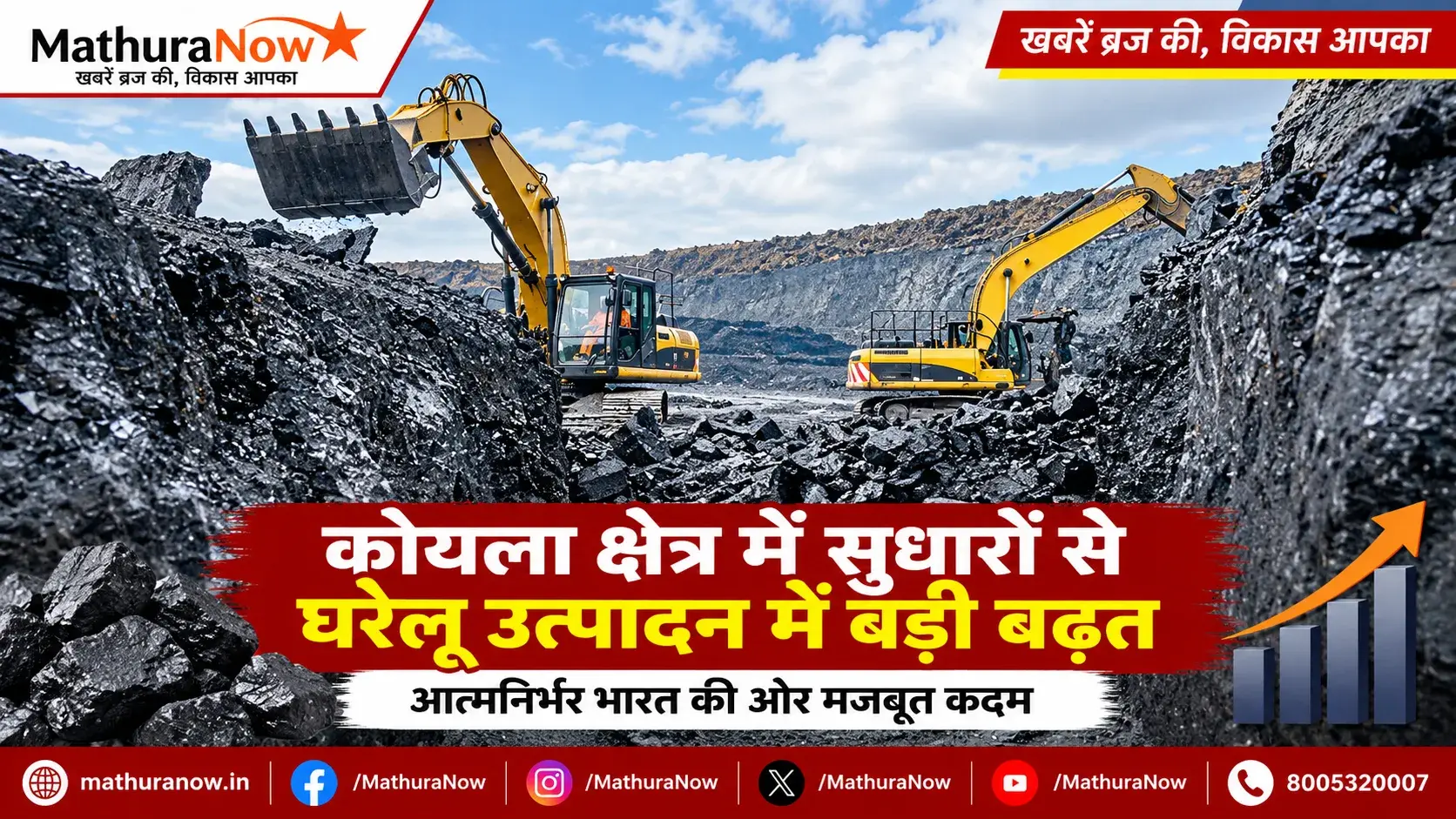
New Delhi, September 12, 2026: India’s coal sector has experienced a substantial evolution since 2014, driven by a series of structural and policy reforms under the leadership of Prime Minister Shri Narendra Modi. These initiatives were designed to improve energy security, operational ease, infrastructure, and technology adoption while enhancing transparency. This shift in national strategy has resulted in domestic coal production exceeding the 1-billion-tonne milestone for the second consecutive year, reaching 1.04 billion tonnes in the 2025-26 fiscal year. Coal remains a critical energy source, currently fueling approximately 73% of the country’s electricity generation.
South Eastern Coalfields Limited (SECL), a Mini Ratna subsidiary of Coal India Limited (CIL), has emerged as a central contributor to this national growth. Operating across Chhattisgarh and Madhya Pradesh, the company produced 176.28 million tonnes of coal in the 2025-26 fiscal year. This figure accounts for roughly 23% of the total output from CIL and approximately 17% of India’s aggregate coal production. The scale of these operations supports a workforce of more than 36,000 regular employees and 24,000 contractual workers, alongside an extensive network of service providers and suppliers.
The company’s growth trajectory highlights significant gains in efficiency and capacity over the past decade. Annual production has increased from 124.26 million tonnes in 2013-14 to 176.28 million tonnes in 2025-26, while coal offtake grew by more than 46% to 178.63 million tonnes across 13 states. A primary indicator of this progress is the Output per Man-Shift (OMS), which has more than doubled from 7.23 tonnes in 2013-14 to 16.47 tonnes in 2025-26.
Expanding Infrastructure and Mechanization
SECL’s operations are anchored by three major mines in Korba—Gevra, Kusmunda, and Dipka—which possess a combined capacity of 185 million tonnes. To support the movement of coal, the company is collaborating with the Government of Chhattisgarh and IRCON on the development of the Chhattisgarh East Railway and Chhattisgarh East-West Railway corridors. This project involves a ₹13,685 crore investment and covers 342.6 kilometers, connecting the Mand-Raigarh and Korba coalfields to the national rail system.
Efforts to modernize coal evacuation include the implementation of eleven First Mile Connectivity (FMC) projects at a cost of approximately ₹2,700 crore. These projects provide 156 million tonnes of annual capacity and have helped reduce carbon footprints. The role of mechanized infrastructure is expanding, with FMC-linked dispatches growing by 28% in the 2025-26 fiscal year, accounting for 41.3% of total dispatch.
Also Read: Strong Opposition Is Essential for a Healthy Democracy: The Global Debate Over Democratic Balance
Inside the mines, the adoption of new technology is a priority. Over 88% of coal production now utilizes surface miners, which eliminates conventional drilling and blasting to reduce noise and dust. Additionally, continuous miners support underground production, accounting for 76% of SECL’s output from such mines. At the Singhali Underground Mine, new paste fill technology has been introduced to improve stability by filling mined-out spaces with an engineered mixture, allowing for extraction in areas previously considered difficult for conventional mining. Future expansion plans include seven additional projects designed to provide 85 million tonnes per year of mechanized loading capacity.
Source: PIB — Press Releases
Get Mathura's latest news on WhatsApp
Breaking news and important local updates, straight to your phone
Join channel