Why Mathura Students Need AI Literacy Beyond Just Using Tools
As AI integrates into classrooms, Mathura students need critical thinking skills over simple tool usage. Learn the five key lessons for responsible AI learning.
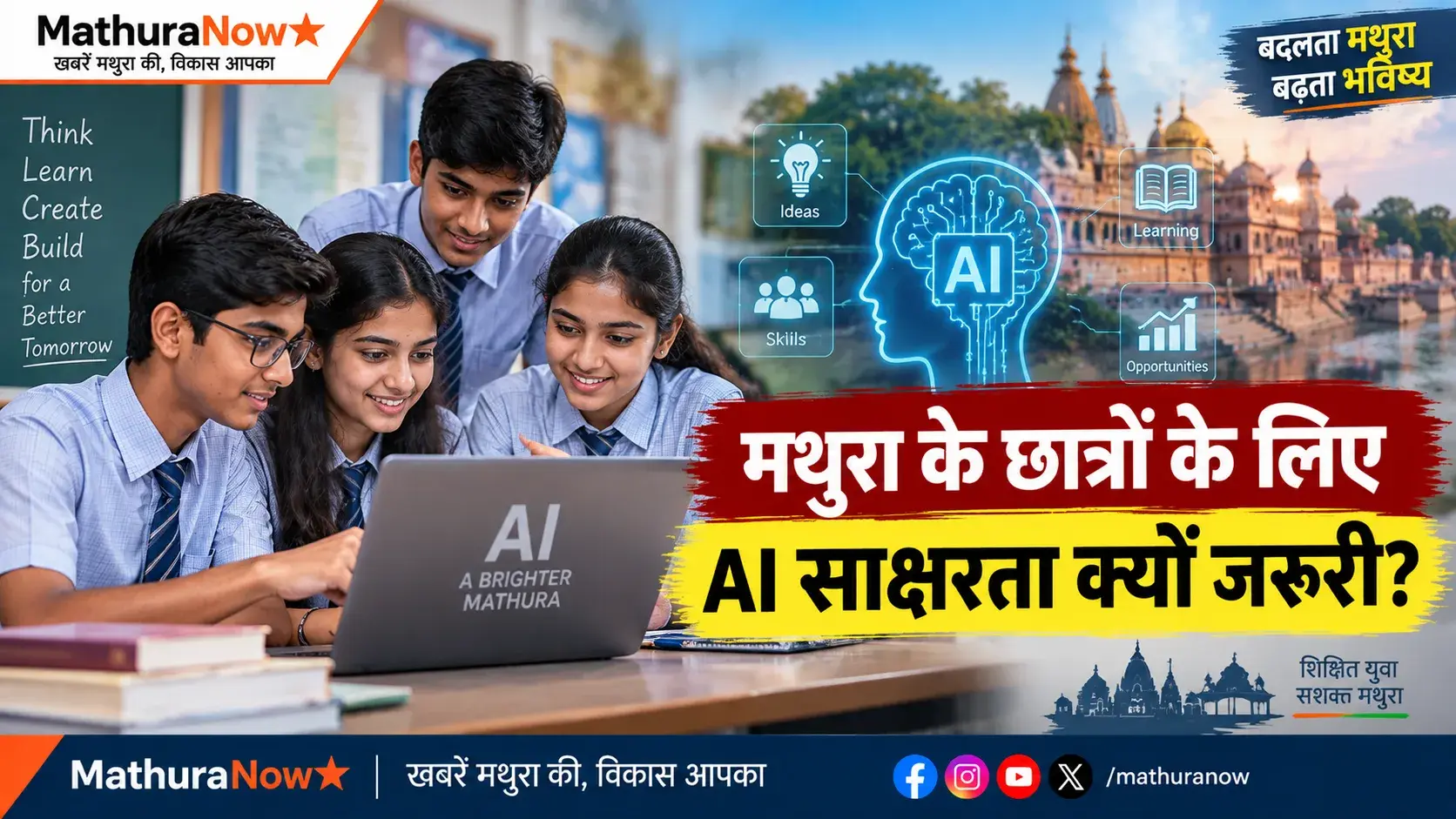
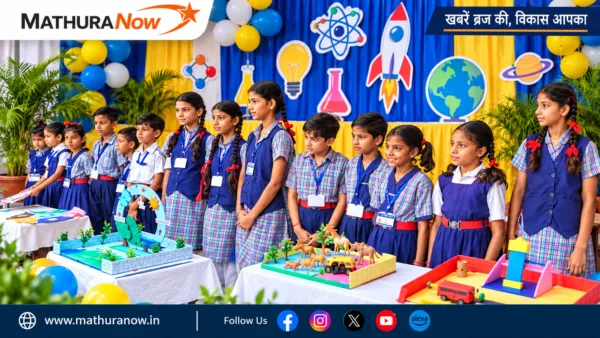
Mathura, September 20, 2026: In an era where the digital landscape is evolving at an unprecedented pace, children in Mathura and across India are growing up surrounded by smartphones, internet platforms, and the rapidly advancing field of Artificial Intelligence (AI). From assisting with school assignments to generating imagery and answering complex queries, AI has become an inseparable element of daily digital life. However, educational experts and policy initiatives are shifting their focus away from merely teaching children how to operate AI tools. The consensus among educators is that the real necessity lies in fostering a deeper understanding of how these systems function, when to trust their output, and when to exercise healthy skepticism through manual verification.
The Core Curriculum of Critical Thinking
As India moves toward integrating Computational Thinking and Artificial Intelligence into school education by 2026-27, the focus for students from classes 3 to 8 is expanding beyond traditional subjects. The upcoming curriculum emphasizes logical reasoning, problem-solving, pattern recognition, and data literacy. Central to these reforms is the concept of responsible and ethical AI use. One of the primary lessons children must learn early is that AI does not guarantee factual accuracy. While AI can provide answers instantly, these responses are generated based on existing datasets and patterns, which can sometimes contain errors or hallucinations. Future success will depend less on the ability to find an answer and significantly more on the ability to verify that answer against reliable sources such as textbooks or teachers.
Also Read: Akhil Bharatiya Agarwal Sammelan Appoints New Leadership in Mathura
Furthermore, students must learn to distinguish between machine processing and human cognition. While AI excels at pattern matching, it lacks the human capacity for contextual understanding, lived experience, and social nuance. A student using AI for homework should not simply copy-paste the output; instead, they should evaluate the content critically. The question should shift from “What did the AI say?” to “Is this information accurate, and how can I prove it?” This distinction is vital for maintaining academic integrity while leveraging technology as a tool for deeper conceptual learning rather than a shortcut.
Prioritizing Safety and Learning Ethics
Digital safety is a foundational element of AI literacy that cannot be overlooked. Children must be taught that inputting personal information into AI platforms poses significant risks. Parents and educators should enforce a strict policy regarding the sharing of sensitive data, including home addresses, mobile numbers, passwords, school IDs, and private family photographs. Teaching privacy is just as essential as teaching technology usage, as early exposure to the risks of data sharing sets the stage for lifelong cybersecurity habits.
Moreover, the pedagogical approach to AI is undergoing a transformation. If a student relies on AI to finish their homework, they might secure the correct result but fail to understand the underlying principles of the subject. A more effective approach is to treat AI as a personalized learning assistant. For instance, instead of asking for a solution to a math problem, a student could ask the AI to explain the step-by-step logic behind the process. This transforms the technology from a static answer engine into an interactive tutor that fosters genuine comprehension.
Preparing Mathura’s Students for a Tech-Driven Future
In the Braj region, AI is no longer a distant concept confined to technology hubs. With the expansion of digital education initiatives in Uttar Pradesh and programs like “Yuva AI for All,” foundational AI education is becoming accessible even in underserved areas. This progress ensures that students in Mathura are being prepared for a future where AI will be a standard professional tool across various fields—ranging from medicine and journalism to farming and engineering. By cultivating the habit of asking the right questions, breaking down complex problems, and scrutinizing AI-generated information, local students are gaining the necessary skills to navigate the modern world. Ultimately, the goal is not to produce a generation of programmers, but to empower a generation of critical thinkers who can work alongside artificial intelligence with confidence, ethical responsibility, and discernment.

Pradeep Delpuriya "Maanu"
Bureau Chief
Pradeep Delpuriya "Maanu" is a distinguished educator and media professional based in Kanpur Nagar, Uttar Pradesh. Alongside his active role in journalism as a field reporter and…
Get Mathura's latest news on WhatsApp
Breaking news and important local updates, straight to your phone
Join channel