Strong Opposition Is Essential for a Healthy Democracy: The Global Debate Over Democratic Balance
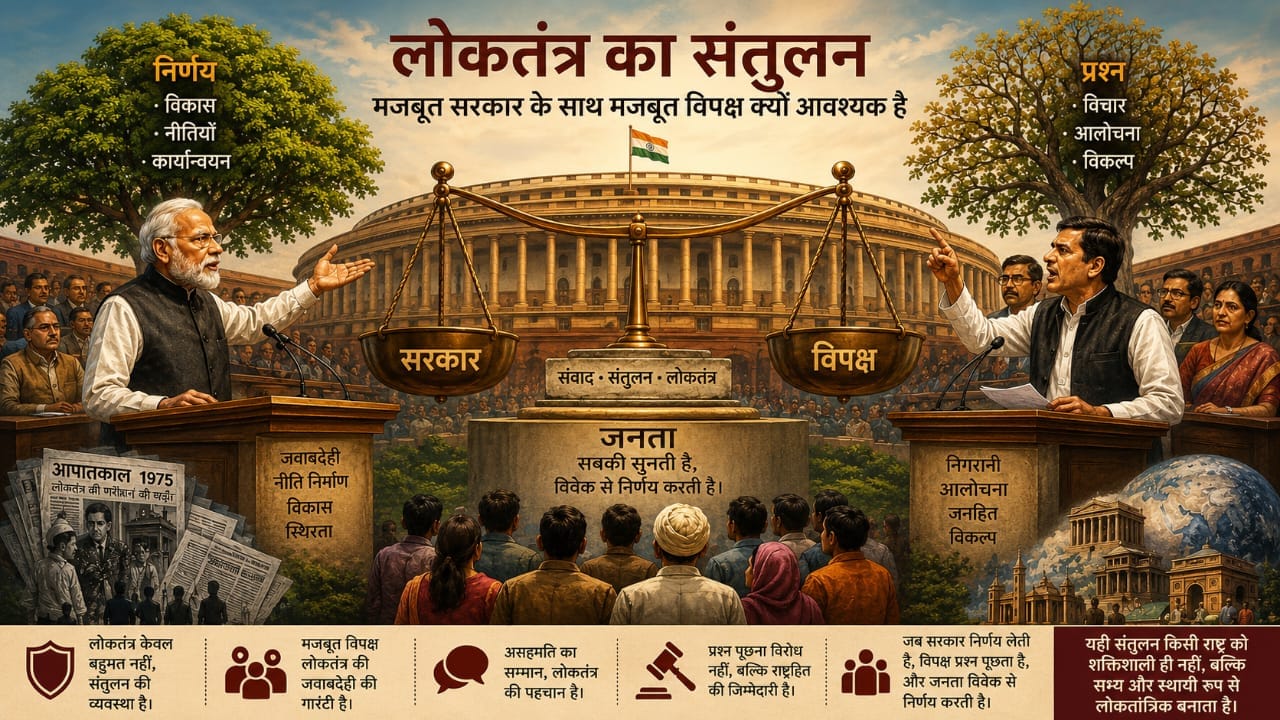
In every successful democracy, elections alone do not define political maturity. The true strength of a democratic system lies in its ability to protect disagreement, encourage debate, and maintain institutional balance between the government and the opposition.
Across the world, discussions around strong leadership and centralized governance are growing rapidly. However, political thinkers and democratic scholars continue to emphasize one important question: Is a strong government alone enough for a healthy democracy, or is a strong and responsible opposition equally necessary?
Also Read: Emotional Enactment of Narad Moh and Ravana’s Birth Held in Mathura Ram Leela Mahotsav
This debate is not limited to politics alone. It directly affects freedom of expression, institutional accountability, public transparency, and long-term democratic stability.
Political philosopher John Stuart Mill once argued that the success of democracy depends on how safely minority opinions are protected within the system. If governments gain unlimited authority without meaningful scrutiny, democratic institutions may continue to exist formally, but the democratic spirit gradually weakens.
For this reason, many parliamentary democracies treat opposition parties not as enemies of the state, but as essential constitutional pillars. In the United Kingdom, the opposition is officially referred to as “His Majesty’s Loyal Opposition,” reflecting the principle that criticism of government policies does not mean opposition to national interest.
International political history provides several examples where weak opposition eventually led to institutional imbalance. During the 1930s in Germany, the weakening of parliamentary opposition and institutional safeguards contributed to the rise of centralized authoritarian power. Similar debates have emerged in countries such as Russia and Türkiye, where analysts have discussed the long-term impact of declining institutional opposition on democratic systems.
Experts clarify that these examples are not intended as criticism of specific political systems, but rather as reminders that democracy depends not only on elections, but also on institutional balance and constitutional accountability.
India’s democratic experience also highlights the importance of opposition politics. The Emergency period of 1975 remains one of the most significant moments in Indian democratic history. Restrictions on press freedom, political arrests, and limitations on civil liberties demonstrated how democratic institutions can come under pressure when opposition voices become weaker.
However, the 1977 general elections also showed the resilience of Indian democracy. Voters restored political balance through electoral change, proving that democratic systems survive when citizens continue protecting institutional accountability.
Political analysts also point toward the coalition era of the 1990s in India. While some viewed coalition politics as unstable, others believe that period encouraged wider parliamentary debates, regional representation, economic continuity, and policy negotiations. It demonstrated that opposition parties can contribute to governance by representing diverse voices and regional aspirations.
Modern democracies such as the United States, Canada, Australia, and the United Kingdom continue strengthening democratic systems through active parliamentary questioning, committee oversight, judicial independence, and media scrutiny.
In Britain, the Prime Minister regularly answers direct questions inside Parliament, creating a culture of visible accountability. In the United States, institutional checks and balances between political parties, Congress, courts, and media remain central to democratic functioning.
Experts believe that a strong opposition does not simply mean having more seats in parliament. A responsible opposition must challenge government policies using facts, policy alternatives, and constructive criticism instead of constant obstruction or political slogan-based confrontation.
Also Read: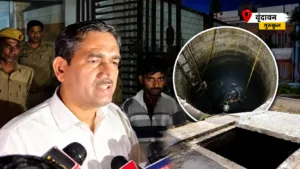 Four Students Die After Entering Underground Water Tank in Vrindavan Gurukul
Similarly, governments must avoid treating every disagreement as hostility. Democracies function best when criticism is respected, dialogue remains open, and institutions continue operating independently.
Political scholars argue that modern younger generations increasingly consume politics through social media trends, election campaigns, and short-term narratives. However, democracy is not limited to voting rights alone. It also includes the citizen’s ability to question authority, demand transparency, and participate in informed public debate.
Understanding the role of opposition politics is therefore directly connected to the protection of civil liberties, institutional transparency, and long-term democratic stability.
Many constitutional experts describe government and opposition as the “two lungs” of democracy. If one becomes too weak, the entire democratic structure can lose balance.
A strong government may be necessary for development and decision-making, but a strong opposition remains equally essential for democratic wisdom, accountability, and institutional health.
The maturity of any nation is ultimately measured not only by how powerful its government becomes, but also by how respectfully it treats dissent, criticism, and alternative political thought.
Democracy remains strongest when governments govern, opposition parties question, institutions remain independent, and citizens thoughtfully evaluate both sides before making informed decisions.
Readers interested in political analysis, democracy, governance, and international affairs can also explore more discussions and editorial stories at MathuraNow.

Pradeep Delpuriya "Maanu"
Bureau Chief
Pradeep Delpuriya "Maanu" is a distinguished educator and media professional based in Kanpur Nagar, Uttar Pradesh. Alongside his active role in journalism as a field reporter and…
Get Mathura's latest news on WhatsApp
Breaking news and important local updates, straight to your phone
Join channel