


Mathura Braj Panchang: September 4, 2026 – Celebrating Krishna Janmashtami
Explore the Mathura daily Panchang for September 4, 2026. Get details on Tithi, Nakshatra, Auspicious timings, and the auspicious Krishna Janmashtami celebrations.
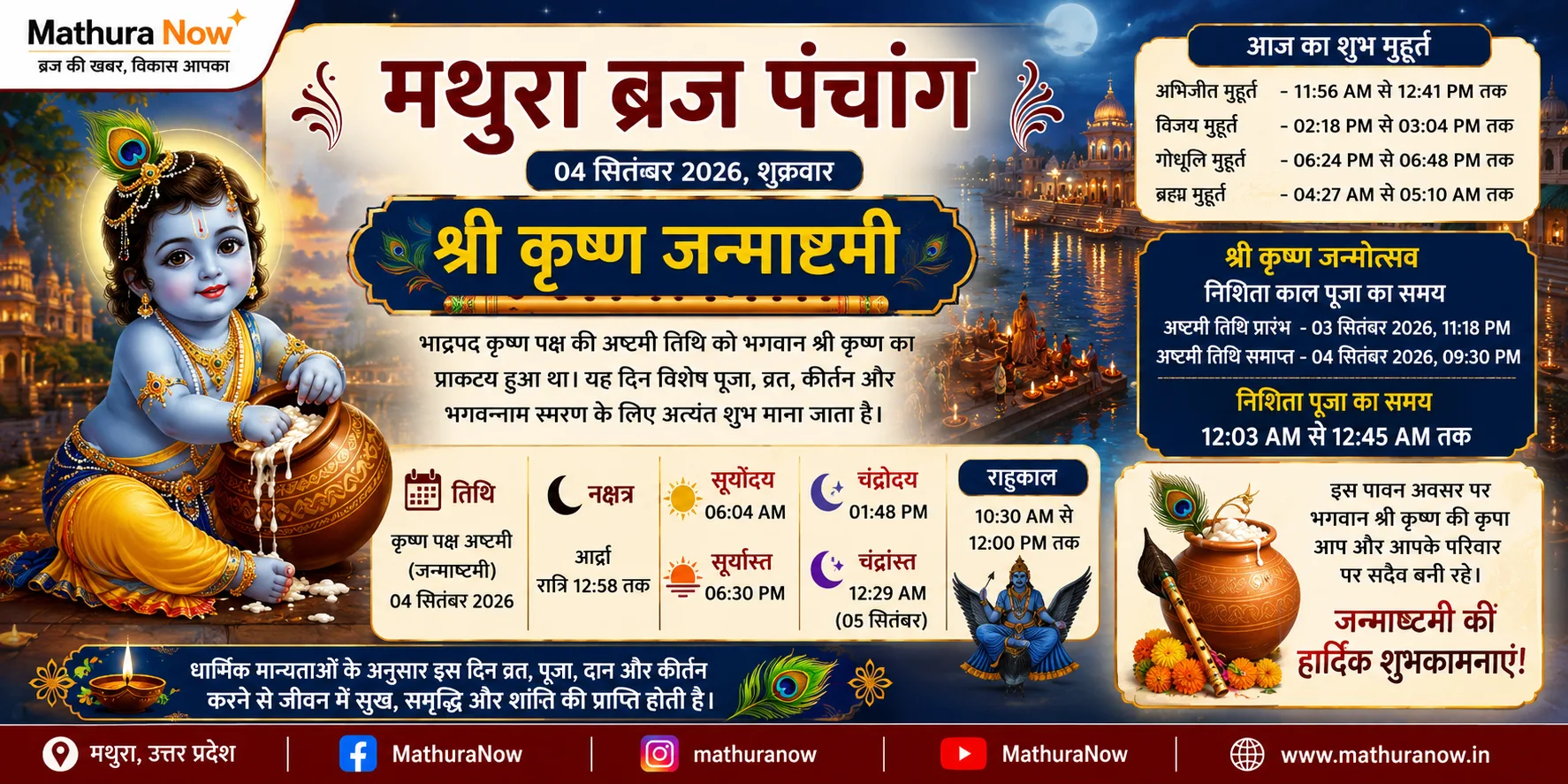
Mathura Daily braj Panchang, September 4, 2026: As the holy city of Mathura prepares for the grand celebrations of Krishna Janmashtami on September 4, 2026, devotees look toward the traditional almanac to mark the auspicious timing of this significant event. The day corresponds to the 8th day of the dark fortnight, or Krishna Paksha, in the month of Bhadrapada. This year, the observance aligns with the Vikrama Samvata year 2083, known as Siddharthi. The spiritual atmosphere across Braj is heightened by the confluence of several significant observances, including Kali Jayanti, Vindhyavasini Jayanti, and the Rohini Vrat, all occurring on this Friday.
Understanding the Celestial Alignments
The lunar cycle plays a central role in the scheduling of these sacred events. According to the daily panchang, the Krishna Ashtami tithi remains effective until 12:13 AM on the following day, September 5, transitioning thereafter into the Krishna Navami tithi. This duration covers the essential windows required for midnight rituals associated with the birth of Lord Krishna. The moon is in the Rohini Nakshatra until 11:04 PM, providing a profound celestial backdrop for the faithful, after which the constellation shifts into Mrigashira. The Harshana yoga remains active until 03:44 PM, before transitioning into the Vajra yoga. Furthermore, the day features the Balava karana until 01:20 PM, followed by the Kaulava karana until the early hours of September 5.
Also Read: Braj Panchang for June 9, 2026: Navami, Sarvartha Siddhi Yoga & Panchak
Auspicious and Inauspicious Timings
For those performing special pujas or beginning significant new endeavors in Mathura, identifying the auspicious time windows is essential. The most revered window, the Abhijit Muhurta, falls between 11:42 AM and 12:33 PM, offering a prime duration for devotional activities. Those observing the day’s significance may also find value in the Vijaya Muhurta, scheduled from 02:13 PM to 03:04 PM. For evening prayers, the Godhuli Muhurta is noted from 06:25 PM to 06:48 PM, while the Amrit Kalam—a period considered highly favorable—is identified between 08:03 PM and 09:33 PM. It is equally important for residents to remain aware of inauspicious segments. The Rahu Kalam occurs between 10:33 AM and 12:07 PM, the Gulikai Kalam between 07:24 AM and 08:58 AM, and the Yamaganda period from 03:16 PM to 04:51 PM. Observers are traditionally advised to avoid these windows for starting new, significant tasks.
As the sun rises over the historic landscape of Mathura at 05:49 AM, the city prepares for a day of intense spiritual focus and community gathering. The sunset is anticipated at 06:25 PM, marking the transition into the evening’s festivities. The moon is expected to rise at 11:22 PM and set the following afternoon at 12:46 PM. With no presence of Bhadra, Panchak, or Ganda Moola, the day remains largely free of complex astrological prohibitions, allowing for a smooth flow of traditional observances. Please note that the Disha Shool for this day is in the West, which traditional guidance suggests avoiding for travel unless absolutely necessary. This confluence of spiritual events underscores the unique cultural heritage of the Braj region, inviting both residents and visitors to participate in the ancient traditions that continue to define the identity of Mathura in the modern era.

Your first comment on any article never needs an account. If an author replies and you want to keep the conversation going, a free account keeps things trustworthy. Log in or sign up.