Nirjala Ekadashi 2026: Panchang Contradiction, Digital Data Confusion & Drik-Siddh Analysis
SEO Meta Description:</strong> Nirjala Ekadashi 2026 date analysis based on Drik-Siddh Panchang, astronomical calculations, digital Panchang contradictions, and traditional Braj spiritual observations.
Special Research Report | MathuraNow Bureau | Shri Dham Mathura-Vrindavan
In Sanatan Dharma, the calculation of fasts, festivals, and sacred lunar dates is not determined merely by calendar pages, but through highly precise astronomical alignments of the Sun and Moon. As devotees across India search for the correct date of Nirjala Ekadashi 2026, a significant contradiction has emerged across the internet, mobile applications, and several automated digital Panchang systems.
Also Read: Braj Raj Utsav 2026: 11-Day Cultural Fair Set for Mathura and Vrindavan
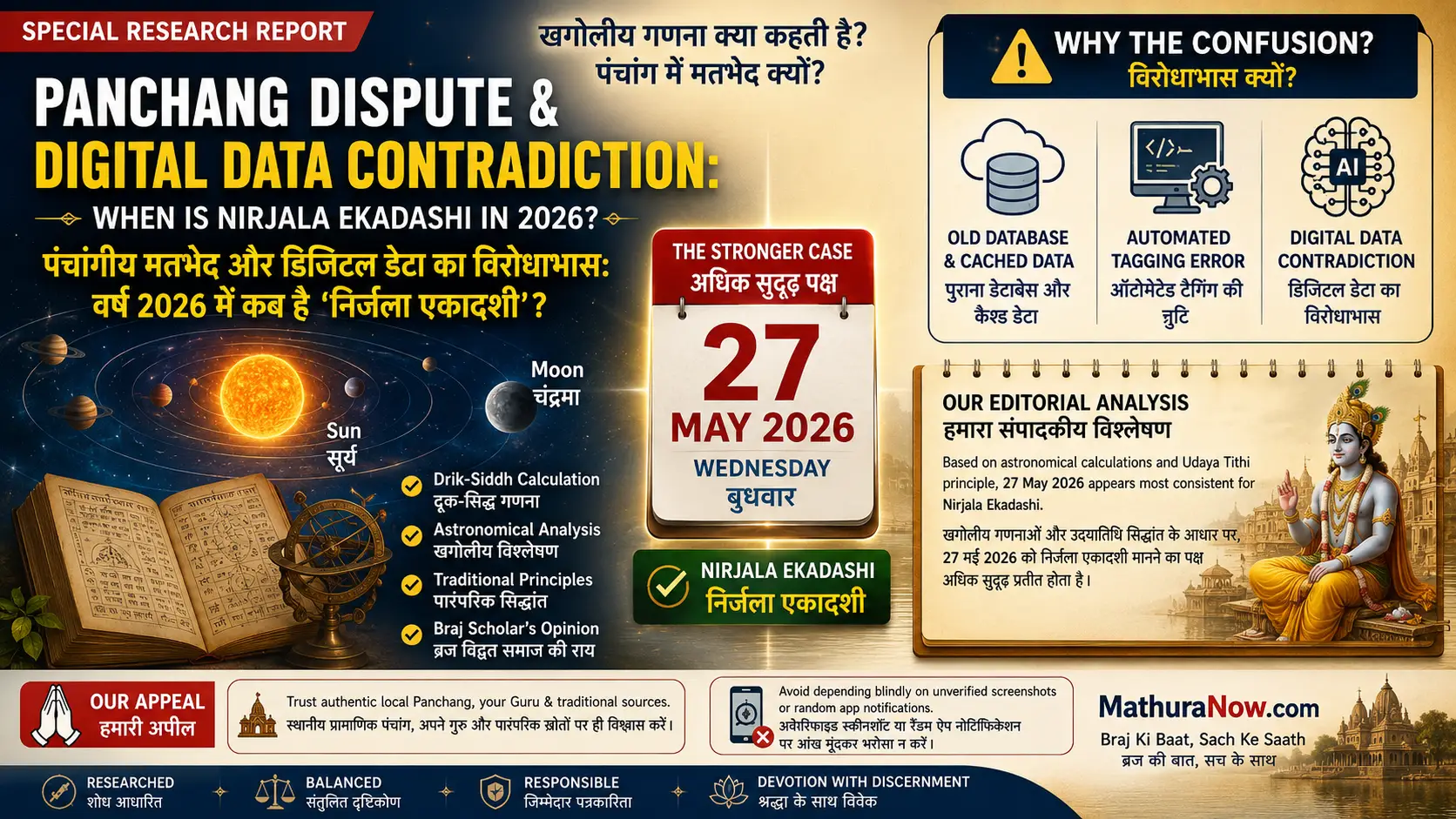
Some online platforms are currently displaying 27 May 2026 as Padmini Ekadashi (an Adhik Maas Ekadashi), while a few other systems are tagging late June 2026 as Nirjala Ekadashi.
This contradiction has created confusion among devotees, spiritual readers, and even regular Panchang followers.
MathuraNow.in conducted a detailed editorial analysis using:
- Drik-Siddh astronomical calculations
- Traditional Surya Siddhanta principles
- Ephemeris-based planetary observations
- Braj regional Panchang traditions
- Opinions from traditional scholarly circles
During this analysis, several important observations emerged.
📊 The Astronomical Rule Behind Adhik Maas
According to the traditional Drik-Siddh Panchang system, the occurrence of Adhik Maas (Malmas or Purushottam Maas) follows a strict astronomical rule.
An Adhik Maas is generally considered possible when:
No solar transition (Surya Sankranti) occurs during an entire lunar month.
When the current 2026 planetary transition data and Ephemeris calculations are examined carefully, the following situation appears more consistent:
- The Sun is already transiting smoothly through Taurus (Vrishabh Rashi) during this lunar cycle.
- The Vrishabh Sankranti has already occurred during mid-May 2026.
- The next major solar transition into Gemini (Mithun Rashi) is expected during mid-June 2026.
Editorial Observation:
Since this lunar period does not appear to contain a “zero Sankranti” condition, the claim of an Adhik Maas during this specific cycle appears comparatively less consistent from a traditional astronomical perspective.
As a result, the classification of this Ekadashi as “Padmini Ekadashi” does not currently appear strongly supported within the available Drik-Siddh framework.
The contradiction visible across internet sources may possibly be linked to:
- Older cached Panchang databases
- Automated tagging systems
- AI-driven calendar synchronization errors
- Historical Adhik Maas data overlap from previous years
⏳ Tithi Analysis: Why 27 May 2026 Appears More Consistent for Nirjala Ekadashi
The next important question naturally becomes:
Which Ekadashi aligns more consistently with traditional Drik-Siddh calculations?
According to the principle of Udaya Tithi (the tithi prevailing at sunrise):
- The Shukla Paksha Ekadashi of Jyeshtha month is expected to begin during the late-night period of 26 May 2026.
- The Ekadashi tithi appears likely to remain fully active during sunrise on Wednesday, 27 May 2026.
Revised Editorial Conclusion:
Based on currently available Drik-Siddh calculations and the Udaya Tithi principle, the position supporting 27 May 2026 as Nirjala Ekadashi appears comparatively stronger and more traditionally consistent.
From both astronomical and Panchang perspectives, this interpretation presently appears more aligned with classical calculation methods.
📅 Why Some Digital Systems Are Showing June 2026
Some automated Panchang systems are currently displaying 25 June 2026 as Nirjala Ekadashi.
Also Read: Shiv-Parvati Vivah Enacted at Shri Krishna Janmabhoomi – Mathura Ram Leela Mahotsav 2026
However, according to traditional lunar progression:
- By late June, the Jyeshtha lunar cycle would already be completed.
- The Ashadha Shukla Paksha period would likely be active.
- That Ekadashi is more widely associated with Devshayani (Harishayani) Ekadashi.
Therefore, the June classification appears more likely connected to:
- Tagging mismatches
- Digital synchronization contradictions
- Automated Panchang labeling systems
🚩 MathuraNow’s Balanced Appeal to Readers
Panchang determination remains an extremely subtle and region-sensitive subject.
Variations may occur due to:
- Amanta vs Purnimanta calendar traditions
- Regional observatory longitude differences
- Local Panchang methodologies
- Temple-specific customs
Therefore, MathuraNow.in respectfully appeals to readers and devotees:
Please avoid depending blindly on random screenshots, unverified social media forwards, or automated app notifications.
Instead, devotees are encouraged to prioritize:
- Authentic local Panchang traditions
- Braj Mandal scholarly references
- Trusted family gurus
- Traditional temple calendars
Based on our current editorial analysis, the position supporting 27 May 2026 as Nirjala Ekadashi presently appears most consistent within the traditional Drik-Siddh framework.
📢 Conclusion
The growing contradiction between traditional Panchang systems and modern automated digital databases highlights a larger issue of technological dependence in spiritual matters.
While digital tools have made Panchang access easier than ever before, subtle astronomical calculations and regional traditions still require careful human interpretation.
In the age of automation, discernment remains just as important as information.
🔗 Internal & External References

Shri Shri Amit Agarwal
Astrologer
Shri Shri Amit Agarwal - Astrologer is associated with MathuraNow and contributes coverage related to spirituality, Braj culture, temple affairs, religious events, public-interest…
Get Mathura's latest news on WhatsApp
Breaking news and important local updates, straight to your phone
Join channel