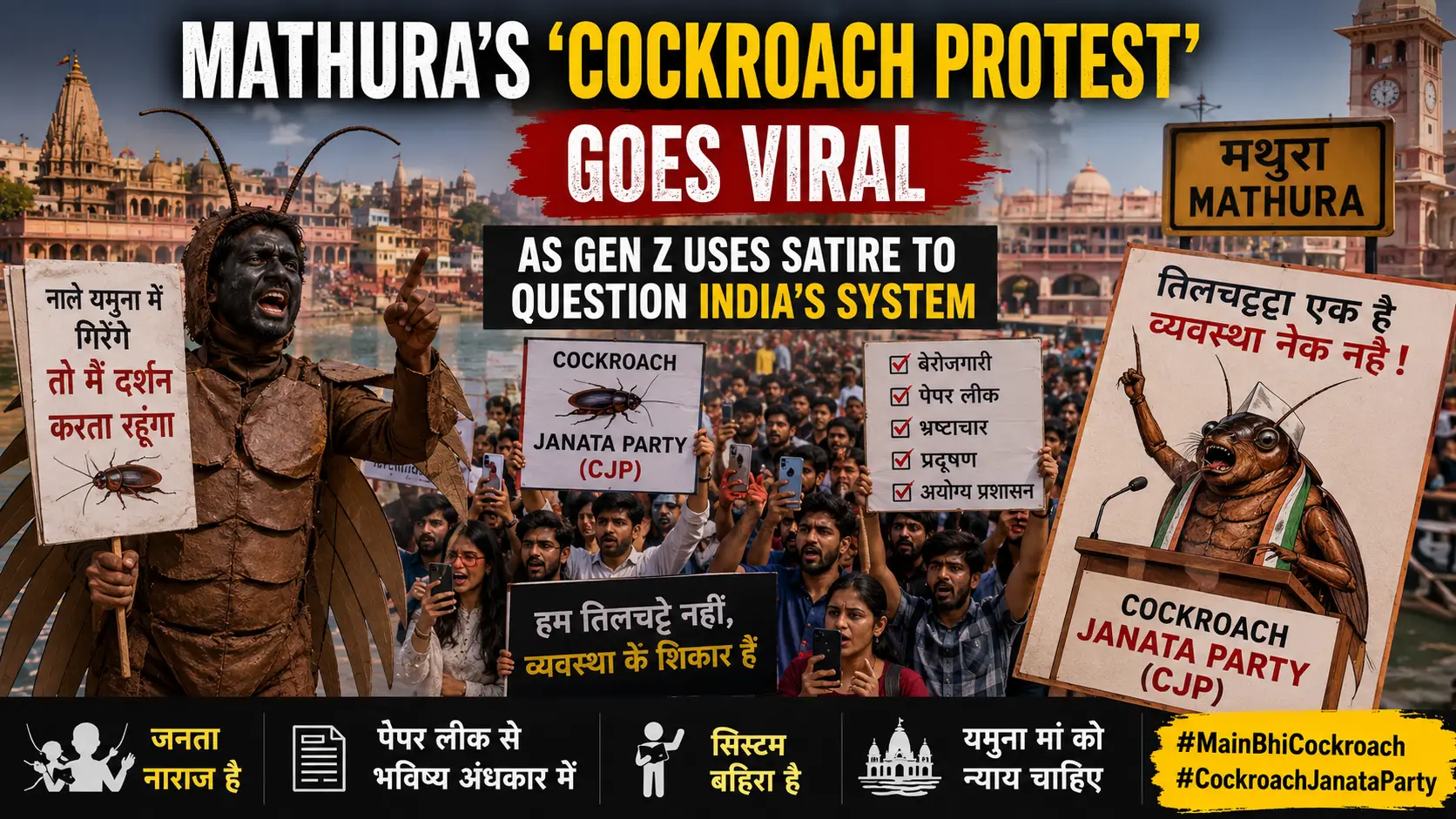
Mathura’s ‘Cockroach Protest’ Goes Viral as Gen Z Uses Satire to Question India’s System
Mathura’s Cockroach Protest’ Goes Viral as Gen Z trend is becoming a symbol of frustration among India’s Generation Z over unemployment, corruption, pollution, and governance failures.
Mathura / New Delhi | May 22, 2026
What began as an absurd AI-generated political meme on Indian social media is now slowly stepping out of mobile screens and onto real streets.
Also Read: Shri Ramlila Sabha to Host Mukut Pujan and Ganesh Ji ki Sawari in Mathura
The viral trend known online as the “Cockroach Janata Party” (CJP) is no longer just another internet joke. For many young Indians — especially frustrated members of Generation Z — it has started symbolizing anger against unemployment, corruption, environmental negligence, examination paper leaks, and what many describe as an increasingly disconnected administrative system.
Over the past few days, platforms like Instagram, X, Facebook, and YouTube Shorts have been flooded with AI-generated posters showing giant cockroaches delivering political speeches while digital crowds chant slogans in support of a fictional “Chief Cockroach.”
Memes, parody reels, and hashtags such as #MainBhiCockroach and #CockroachJanataParty spread rapidly among students and young social media users.
At first glance, the trend appeared ridiculous.
But beneath the humor, many observers believe the satire reflects something much deeper inside India’s younger generation.
Mathura Protest Turns Internet Meme Into Street Reality
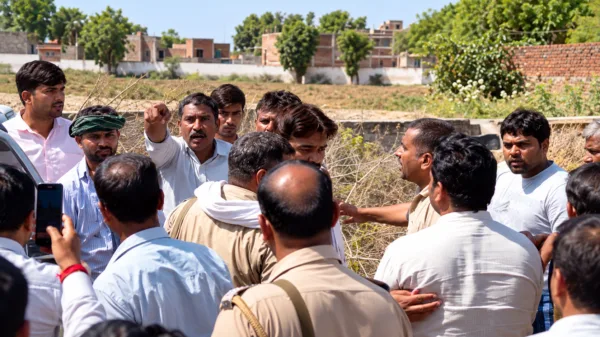
On Friday afternoon around 12 PM, the online trend unexpectedly entered the real world during a symbolic protest in Mathura.
Municipal officials were reportedly visiting the area when an unusual figure suddenly appeared outside the Nagar Nigam office.
Deepak Sharma, a resident of Radha Florence Colony in Vrindavan, arrived dressed like a cockroach.
He had attached cardboard wings to his back and painted his face black to resemble the now-viral internet symbol.
The protest was reportedly organized against the continued dumping of dirty drainage water into the Yamuna River.
Speaking during the protest, Deepak Sharma said:
“When ordinary citizens approach officials with genuine complaints, they are ignored and treated like cockroaches.”
He further explained that recent public conversations around the word “cockroach” inspired him to use the symbol as a form of protest.
“If drains continue flowing into the Yamuna, I will continue visiting like this,” he remarked sarcastically.
However, Sharma clarified that he has no connection with any real political organization or any so-called “CJP party.”
Why Generation Z Connects With the Cockroach Symbol
India’s Generation Z is increasingly using memes, satire, and symbolic internet culture to express political frustration in ways traditional protests often fail to achieve.
Many young Indians today feel:
- Ignored by political systems
- Mentally exhausted by unemployment
- Frustrated by competitive exam paper leaks
- Disconnected from traditional political parties
- Unheard despite raising real issues online
This is precisely why the cockroach metaphor has become unexpectedly powerful.
The idea is brutally simple:
A cockroach survives almost every hostile environment.
For many digitally active unemployed youth, the symbol now represents survival inside a system they increasingly believe is broken.
The Real Crisis Behind the Viral Trend
Experts believe the popularity of the CJP meme reflects deeper social anxieties growing within India’s youth ecosystem.
Also Read: UP Farmer Loan Waiver 2026 Debunking Viral Claims and Official Portals
Major concerns include:
- Youth unemployment
- Repeated recruitment delays
- Examination paper leaks
- Corruption allegations
- Environmental negligence
- Distrust toward institutions
Together, these issues have created visible frustration among students, job seekers, and young professionals across India.
In the past, anger may have stayed limited to tea shops, college campuses, or private conversations.
Today, social media converts emotional frustration into instantly viral symbolism.
Is CJP Just a Joke — or a Warning Sign?
At present, the Cockroach Janata Party is not an actual political organization.
There is:
- No official leadership
- No election structure
- No political manifesto
- No organized national movement
Yet the emotional reaction surrounding the symbol cannot be ignored.
For many young Indians, especially Gen Z users, CJP has become a strange mixture of:
- Anger
- Dark humor
- Hopelessness
- Survival instinct
- Digital rebellion
Whether the trend disappears in a few weeks or evolves into something larger, one thing already seems clear:
India’s younger generation no longer wants to remain silently frustrated.
Internet Satire Is Slowly Entering Real Politics
The Mathura protest demonstrates how internet culture is gradually moving beyond screens into physical public expression.
Memes alone cannot solve unemployment, pollution, corruption, or governance failures.
But memes can expose public frustration in ways traditional political language sometimes fails to understand.
Today, a symbolic “cockroach” is asking uncomfortable questions to the system.
And perhaps the biggest question of all is this:
Does India’s Generation Z merely want to survive inside the system… or finally thrive beyond it?
This article is also available in Hindi, Bengali, Gujarati, Tamil, Telugu, and Urdu. Readers can use the language selector available at the top-right corner of MathuraNow.

News Desk Mathura Now
MathuraNow News Desk is the official editorial team of MathuraNow, covering hyperlocal news, Braj culture, temple affairs, civic developments, spirituality, festivals, public…
Get Mathura's latest news on WhatsApp
Breaking news and important local updates, straight to your phone
Join channel