Railway Family Pension Rules: Eligibility for Unmarried, Widowed & Divorced Daughters
Can unmarried, widowed or divorced daughters receive Railway family pension? Know the latest eligibility rules, RBE circulars, required documents, dependency conditions and application process explained in simple language.
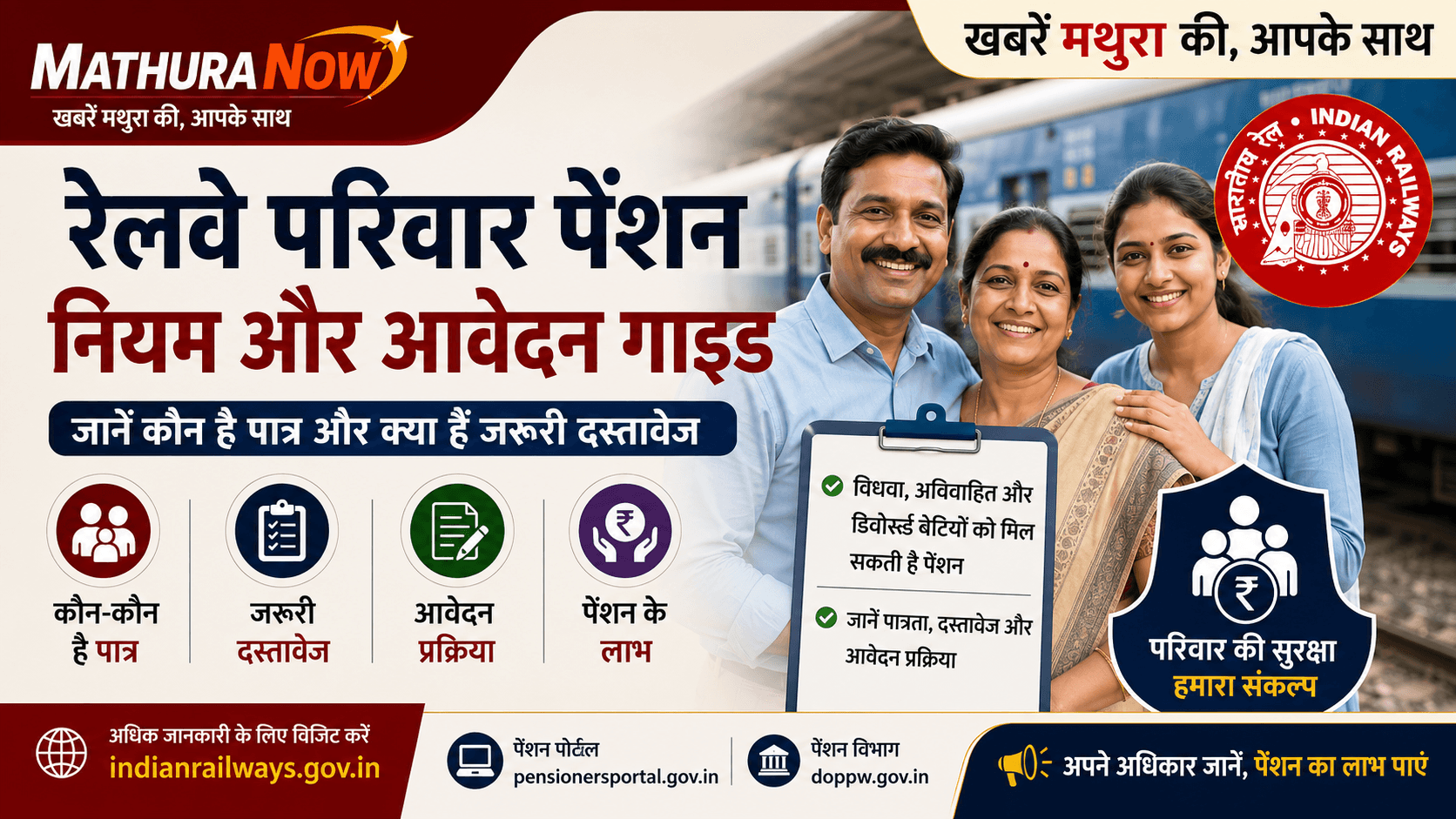
A poster currently being circulated on social media and railway employee groups claims that unmarried, widowed and divorced daughters of deceased railway employees can receive family pension under Indian Railways rules. A detailed review of Railway Board circulars and pension regulations shows that the core information mentioned in the poster is broadly consistent with existing Railway family pension provisions, although eligibility depends upon specific conditions and official verification.
Family pension remains one of the most important social security benefits available to eligible dependents of deceased railway employees and pensioners. Over the years, Railway Board has expanded the scope of family pension through multiple Railway Board Establishment (RBE) circulars and clarifications. This has especially benefited dependent unmarried, widowed and divorced daughters in certain circumstances.
What Does the Viral Railway Family Pension Poster Claim?
The poster states that unmarried, widowed and divorced daughters of deceased railway employees may be eligible for family pension subject to dependency conditions and Railway rules. It also provides a list of required documents, application procedures and references to important Railway Board circulars.
After cross-checking available Railway Board records and pension circulars, the major references mentioned in the poster appear to be linked with actual Railway pension provisions and related clarifications. :contentReference[oaicite:0]{index=0}
Important Railway Board Circulars Mentioned
The poster refers to several important Railway Board instructions regarding family pension eligibility:
- RBE No. 152/2006 (24 July 2006) – Extended family pension eligibility to eligible unmarried, widowed and divorced daughters under prescribed conditions. :contentReference[oaicite:1]{index=1}
- RBE No. 36/2012 – Clarifications regarding dependent daughters and pension-related eligibility.
- Railway Services (Pension) Rules, 1993 – Governing framework for family pension eligibility and payment.
- RBE No. 109/2014 – Clarification regarding widowed/divorced daughters and eligibility conditions after the death of parents.
Who Can Be Eligible for Railway Family Pension?
According to Railway pension rules and subsequent clarifications, family pension may be granted to eligible unmarried, widowed or divorced daughters if they satisfy dependency and eligibility conditions prescribed by the Railway Board. :contentReference[oaicite:5]{index=5}
Also Read: Braj Raj Utsav 2026: 11-Day Cultural Fair Set for Mathura and Vrindavan
However, eligibility is not automatic. Authorities examine factors such as:
- Dependency on the deceased railway employee/pensioner
- Marital status
- Income criteria
- Whether remarriage has occurred
- Sequence of family pension beneficiaries under pension rules
Income Criteria: A Very Important Condition
Many applicants are unaware that dependency remains one of the most important conditions.
Railway Board clarifications linked with 7th Pay Commission implementation indicate that dependency criteria for family pension purposes is connected with the prescribed minimum pension threshold and applicable Dearness Relief. In one important clarification, the dependency limit was linked to a minimum family pension amount of ₹9,000 plus Dearness Relief. :contentReference[oaicite:6]{index=6}
This means authorities may verify whether the applicant daughter is financially dependent as per prevailing pension rules before granting benefits.
Documents Usually Required
The poster’s document list broadly matches the type of documents generally required in family pension cases.
These may include:
- Family pension application form
- PPO copy of deceased pensioner/employee
- Death certificate
- Aadhaar and identity documents
- Bank account details with IFSC
- Income certificate
- Dependency certificate
- Widow/divorce certificate where applicable
- Family member certificate
- Passport-size photographs
- Self-declaration and non-employment certificate
Actual requirements may vary depending upon the concerned Railway division, pension office or specific case circumstances.
Why This Rule Matters for Railway Families
India has lakhs of retired railway employees and family pensioners. For dependent daughters who remain unmarried, become widowed or face financial hardship after divorce, family pension can become a critical source of financial support.
Also Read: Shiv-Parvati Vivah Enacted at Shri Krishna Janmabhoomi – Mathura Ram Leela Mahotsav 2026
Railway pension rules have gradually evolved to address such social realities through multiple amendments and clarifications issued over the years. Experts note that these provisions help strengthen financial security for vulnerable family members after the death of a railway employee or pensioner.
Important Clarification for Readers
Railway family pension approval depends upon official scrutiny and fulfillment of all applicable conditions. Merely falling under the category of unmarried, widowed or divorced daughter does not automatically guarantee pension approval.
Applicants should always verify their eligibility through the concerned Railway pension office, Personnel Department, PCPO office or authorized pension authorities before submitting claims.
Official Railway Reference
Readers can also refer to Railway Board resources and pension-related information through the official Indian Railways portal:
Indian Railways Official Website
Eastern Railway Family Pension Information
Related Reading
8th Pay Commission Update: Railway Employees & Pensioners
Quick Facts
- RBE No. 152/2006 remains one of the key Railway Board references on family pension to eligible daughters.
- Dependency verification is important.
- Income certificates may be required.
- Remarriage can affect eligibility in certain cases.
- Pension approval depends upon Railway authority verification.

News Desk
Editor
MathuraNow News Desk is the official editorial team of MathuraNow, covering hyperlocal news, Braj culture, temple affairs, civic developments, spirituality, festivals, public…
Get Mathura's latest news on WhatsApp
Breaking news and important local updates, straight to your phone
Join channel